×
- Hello
- Login or Register
- Quick Links
- Live Chat
- Track Order
- Parts Availability
- RMA
- Help Center
- Contact Us
- Shop for
- Mitsubishi Parts

My Garage
My Account
Cart
Genuine Mitsubishi Galant Drive Belt
Serpentine Belt- Select Vehicle by Model
- Select Vehicle by VIN
Select Vehicle by Model
orMake
Model
Year
Select Vehicle by VIN
For the most accurate results, select vehicle by your VIN (Vehicle Identification Number).
7 Drive Belts found
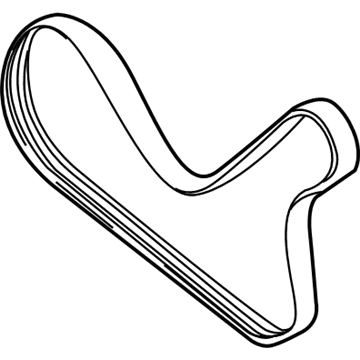
Mitsubishi Galant Serpentine Belt Part Number: MZ690264
$45.70 MSRP: $63.47You Save: $17.77 (28%)Ships in 1-2 Business Days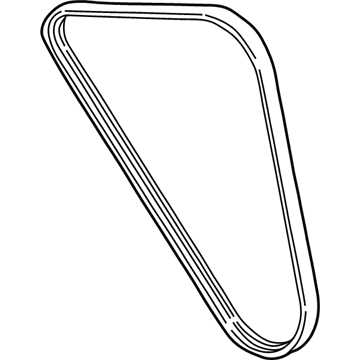
Mitsubishi Galant Serpentine Belt Part Number: 1340A104
$20.42 MSRP: $26.95You Save: $6.53 (25%)Ships in 1-2 Business Days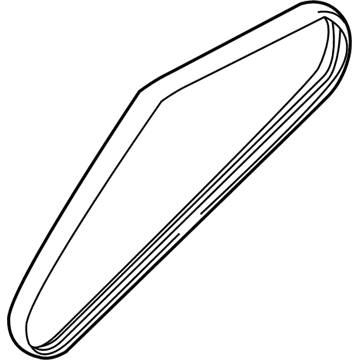
Mitsubishi Galant Power Steering Belt Part Number: MN187017
$29.73 MSRP: $38.72You Save: $8.99 (24%)Ships in 1-2 Business Days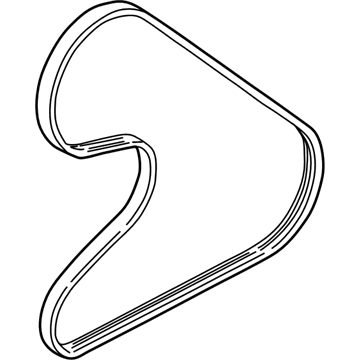
Mitsubishi Galant Power Steering Belt Part Number: MD365263
$30.66 MSRP: $39.95You Save: $9.29 (24%)Ships in 1-2 Business Days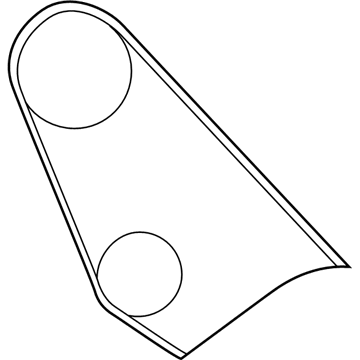
Mitsubishi Galant Alternator Belt Part Number: MD186126
$34.21 MSRP: $44.90You Save: $10.69 (24%)Ships in 1-2 Business Days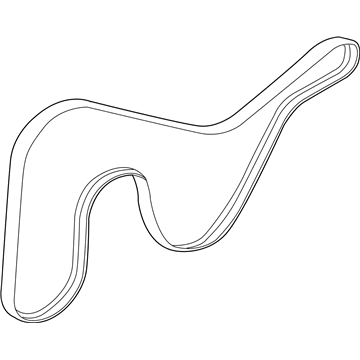
Mitsubishi Galant Serpentine Belt Part Number: 1340A004
$44.39 MSRP: $57.95You Save: $13.56 (24%)Ships in 1-2 Business Days
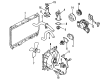
Mitsubishi Galant Alternator Belt Part Number: MD187461
$42.72 MSRP: $56.07You Save: $13.35 (24%)Ships in 1-2 Business Days
Mitsubishi Galant Drive Belt
OEM Drive Belt can boast superior quality and long-term durability. Each part meets strict factory specs and passes careful checks in production. So you'll get Drive Belt with long-lasting strength and an exact fit. If you need OEM Mitsubishi Galant Drive Belt, the online store is the ideal place. The store carry a wide range of genuine Mitsubishi Galant parts at the highly competitive prices. You'll enjoy a simple and no-hassle shopping experience. You'll get unbeatable prices and fast delivery service. You'll get the manufacturer's warranty and a straightforward return policy. Shop with confidence and keep your car in top condition.
Mitsubishi Galant Drive Belt Parts Questions & Experts Answers
- Q:What are the crucial aspects of a Drive Belt's role in a operation and maintenance on Mitsubishi Galant?A:The drivebelts are found at the front of the engine. These belts do vital work in your car's components as well as the car itself. Over time, they can fail. Furthermore, they should be checked and adjusted periodically to avoid serious damage. Depending on the engine and accessories, there are different belt arrangements. For the 1998 and earlier models that have air-conditioning, there are three belts. For the 1999 and later four-cylinder engine, there are two belts. For the V6 engine, there are also two belts. You first want to make sure that the engine is off and the hood is open. You want to check the belts for cracks, separation, fraying and glazing. Also check the ribs for uniform depth. Belt tension is measured with about 20 pounds at the midpoint between pulleys. A set deflection is applied; for example, 1/2 inch when the distance is 12 inches between pulleys. Elevating the vehicle securely may be necessary for adjustments and tension can be altered by moving an idler wheel or components. To replace them, loosen the adjustment so you can remove the old belts. Ideally, you should replace all the belts at once. Make sure to identify each belt and its function so that you can put it back on correctly. When purchasing new belts, take the old ones for comparison. After installation, ensure that the new belts are properly positioned in the pulleys and centrally placed before heading out for ten minutes. After that, check the tension and adjust if needed.
Related Mitsubishi Galant Parts
 Mitsubishi Galant Radiator Hose
 Mitsubishi Galant Belt Tensioner Bolt
 Mitsubishi Galant Coolant Pipe Seal
 Mitsubishi Galant Coolant Reservoir Cap
 Mitsubishi Galant Coolant Reservoir Hose
 Mitsubishi Galant Cooling Hose
 Mitsubishi Galant Idler Pulley
 Mitsubishi Galant Idler Pulley Bolt
 Mitsubishi Galant Serpentine Belt
 Mitsubishi Galant Thermostat Gasket
 Mitsubishi Galant V-Belt
 Mitsubishi Galant Water Pump Pulley
Browse by Year
2012 Drive Belt 2011 Drive Belt 2010 Drive Belt 2009 Drive Belt
2008 Drive Belt
2007 Drive Belt
2006 Drive Belt
2005 Drive Belt
2004 Drive Belt
2003 Drive Belt 2002 Drive Belt 2001 Drive Belt 2000 Drive Belt 1999 Drive Belt 1996 Drive Belt 1995 Drive Belt 1994 Drive Belt 1993 Drive Belt 1992 Drive Belt 1991 Drive Belt 1990 Drive Belt 1989 Drive Belt 1988 Drive Belt