×
- Hello
- Login or Register
- Quick Links
- Live Chat
- Track Order
- Parts Availability
- RMA
- Help Center
- Contact Us
- Shop for
- Mitsubishi Parts

My Garage
My Account
Cart
Genuine Mitsubishi Galant PCV Valve
Position Crank Ventilation Valve- Select Vehicle by Model
- Select Vehicle by VIN
Select Vehicle by Model
orMake
Model
Year
Select Vehicle by VIN
For the most accurate results, select vehicle by your VIN (Vehicle Identification Number).
5 PCV Valves found
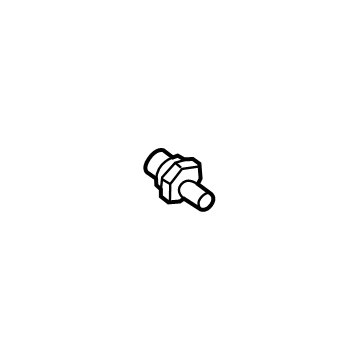
Mitsubishi Galant PCV Valve Part Number: 1035A422
$58.67 MSRP: $81.48You Save: $22.81 (28%)Ships in 1-2 Business Days
Mitsubishi Galant PCV Valve Part Number: MD024719
$11.42 MSRP: $14.87You Save: $3.45 (24%)Ships in 1-2 Business DaysMitsubishi Galant PCV Valve Part Number: MD104723
$11.90 MSRP: $15.50You Save: $3.60 (24%)Ships in 1-2 Business Days
Mitsubishi Galant PCV Valve Part Number: MD183547
$35.48 MSRP: $46.56You Save: $11.08 (24%)Ships in 1-2 Business DaysMitsubishi Galant PCV Valve Part Number: MD152772
$39.56 MSRP: $51.92You Save: $12.36 (24%)Ships in 1-2 Business Days
Mitsubishi Galant PCV Valve
OEM PCV Valve can boast superior quality and long-term durability. Each part meets strict factory specs and passes careful checks in production. So you'll get PCV Valve with long-lasting strength and an exact fit. If you need OEM Mitsubishi Galant PCV Valve, the online store is the ideal place. The store carry a wide range of genuine Mitsubishi Galant parts at the highly competitive prices. You'll enjoy a simple and no-hassle shopping experience. You'll get unbeatable prices and fast delivery service. You'll get the manufacturer's warranty and a straightforward return policy. Shop with confidence and keep your car in top condition.
Mitsubishi Galant PCV Valve Parts Questions & Experts Answers
- Q:What is the function and location of the PCV valve, and How to check its operation and replace it if necessary on Mitsubishi Galant?A:The PCV valve is designed to control the volume of crankcase vapors entering the engine intake manifold. The PCV valve has a spring-loaded mechanism that opens in response to positive intake manifold vacuum. As the intake manifold is under vacuum, vapors are pulled from the valve cover into the combustion chamber. On SOHC four-cylinder engines, it is located on top of the valve cover, while on DOHC four-cylinder engines, it is threaded into the right rear, and on the V6, at the end of the valve cover. To see how it functions, remove the valve with the hose still attached. If you have a DOHC engine, detach the hose first. You know, after starting up the engine, give a keen hear for a hissing sound coming out from the valve. The moment you hear this, put your finger over the opening to feel if vacuum is present. A vacuum will be present if everything is working fine and the engine is idling. If there is no vacuum check for blocked hoses or ports and replace any damaged parts. Also, use a small screwdriver to push the spring-loaded valve to check whether it returns to its seat. Otherwise, it may be sluggish and contaminated, which implies a replacement is necessary. When you buy a new PCV valve, it must match the vehicle and engine size of your car. Compare it with old PCV valve. The reverse procedure of removal is installation.
Related Mitsubishi Galant Parts
 Mitsubishi Galant Exhaust Manifold
 Mitsubishi Galant Catalytic Converter Gasket
 Mitsubishi Galant Diverter Valve
 Mitsubishi Galant EGR Valve
 Mitsubishi Galant Exhaust Flange Gasket
 Mitsubishi Galant Exhaust Hanger
 Mitsubishi Galant Exhaust Heat Shield
 Mitsubishi Galant Exhaust Nut
 Mitsubishi Galant Exhaust Pipe
 Mitsubishi Galant Muffler Strap
 Mitsubishi Galant Secondary Air Injection Check Valve
 Mitsubishi Galant Vapor Canister Purge Solenoid
Browse by Year
2011 PCV Valve 2010 PCV Valve 2009 PCV Valve 2008 PCV Valve 2007 PCV Valve 2006 PCV Valve 2005 PCV Valve 2004 PCV Valve 2003 PCV Valve 2002 PCV Valve 2001 PCV Valve 2000 PCV Valve 1999 PCV Valve 1998 PCV Valve 1997 PCV Valve 1996 PCV Valve 1995 PCV Valve 1994 PCV Valve 1993 PCV Valve 1992 PCV Valve 1991 PCV Valve 1990 PCV Valve 1989 PCV Valve 1988 PCV Valve 1987 PCV Valve 1986 PCV Valve