×
- Hello
- Login or Register
- Quick Links
- Live Chat
- Track Order
- Parts Availability
- RMA
- Help Center
- Contact Us
- Shop for
- Mitsubishi Parts

My Garage
My Account
Cart
Genuine Mitsubishi Galant Thermostat
Engine Coolant Thermostat- Select Vehicle by Model
- Select Vehicle by VIN
Select Vehicle by Model
orMake
Model
Year
Select Vehicle by VIN
For the most accurate results, select vehicle by your VIN (Vehicle Identification Number).
6 Thermostats found
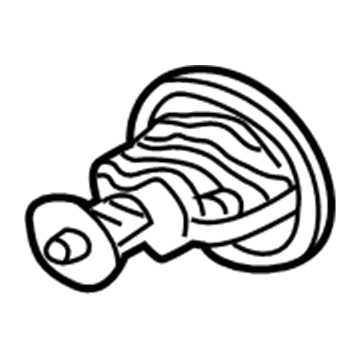
Mitsubishi Galant Thermostat Part Number: MD972903
$25.36 MSRP: $33.02You Save: $7.66 (24%)Ships in 1-2 Business Days
Mitsubishi Galant Thermostat Part Number: MD350415
$30.14 MSRP: $39.25You Save: $9.11 (24%)Ships in 1-2 Business Days
Mitsubishi Galant Thermostat Part Number: MD328070
$30.92 MSRP: $40.27You Save: $9.35 (24%)Ships in 1-2 Business DaysMitsubishi Galant Thermostat Part Number: MD194988
$35.56 MSRP: $46.66You Save: $11.10 (24%)Ships in 1-2 Business Days
Mitsubishi Galant Thermostat Part Number: MD315301
$38.84 MSRP: $50.96You Save: $12.12 (24%)Ships in 1-2 Business Days
Mitsubishi Galant Thermostat Part Number: 1305A278
$40.50 MSRP: $53.15You Save: $12.65 (24%)Ships in 1-2 Business Days
Mitsubishi Galant Thermostat
The Mitsubishi Galant Thermostat helps to control the engine's operating temperature by regulating the flow of coolant. Due to the proximity of the radiator, the Mitsubishi Galant Thermostat remains closed at start and helps the engine to warm up rapidly and also reach the efficient combustion temperature quickly. As soon as the cooled liquid reaches the set value, an internal heat-sensitive device starts to expand. This causes the valve in the Galant Thermostat to open and a flow of liquid takes place through the radiator, which loses excess heat. In case the temperature falls towards the minimum limit, the element contracts, the valve closes, and flow is reduced so heat is conserved. To prevent overheating as well as overcooling, the Thermostat allows the building to retain and release heat. This is a mechanical action. It does not need programming or any external interaction. It just uses the property of its functional core. When combined with the water pump and radiator, together with the coolant passages, it plays an important component of the complete Mitsubishi cooling system, protecting important engine components from heat stress. An ideal Mitsubishi component within a Galant chassis allows the engine to warm up and maintain the proper operating temperature while driving in various conditions or to prevent a loss of power or damage due to extreme heat or cold.
OEM Thermostat can boast superior quality and long-term durability. Each part meets strict factory specs and passes careful checks in production. So you'll get Thermostat with long-lasting strength and an exact fit. If you need OEM Mitsubishi Galant Thermostat, the online store is the ideal place. The store carry a wide range of genuine Mitsubishi Galant parts at the highly competitive prices. You'll enjoy a simple and no-hassle shopping experience. You'll get unbeatable prices and fast delivery service. You'll get the manufacturer's warranty and a straightforward return policy. Shop with confidence and keep your car in top condition.
Mitsubishi Galant Thermostat Parts Questions & Experts Answers
- Q:What steps should be taken before assuming the thermostat is to blame for a cooling system problem on Mitsubishi Galant?A:Andrew Becker (1999) suggests that before assuming a thermostat is the cause of a problem in the cooling system, verify the level of coolant, tension on the drivebelt, and operation of the temperature gauge. When the engine appears to be taking excessive time to warm up, according to the heater output or temperature gauge performance, then it is likely that the thermostat is stuck open and requires a replacement. When the engine is overheating, look at the temperature of the lower Radiator hose; when the engine is hot, but the radiator hose is not hot, then the thermostat is probably stuck open and coolant cannot escape into the radiator and should be replaced. It is recommended to be careful, because driving without a thermostat can cause emissions, and fuel economy problems. When the lower radiator hose is hot it means that coolant is flowing and the thermostat is open. Disassemble the cable with the negative battery terminal and empty the cooling system, preserving the coolant in the case it is intact. Find the thermostat housing, which is the lower radiator hose to the engine; on older models you may need to remove the air filter housing to access the thermostat and on newer models you may need to remove the battery. To loosen the hose clamp, then unscrew the hose and remove the hose, with pliers where needed. In case of corrosion or deterioration of the thermostat housing cover, change of the cover is necessary. On four-cylinder models, loosen the fasteners and take off the cover of the thermostat housing, ready to spill the coolant. Record the position of the thermostat prior to taking out. In the case of V6, do the same thing, but remember to record the direction of the jiggle valve. Take off the old gasket material off the housing and cover, put on a new rubber gasket on the thermostat and replace the thermostat back in the housing with the spring-end towards the engine. Where necessary, make sure that the jiggle valve is in place. Install the housing cover and bolts to the thermostat housing and tighten it to the desired specified torque. Make sure the clamp is firmly attached,then reconnect the hose to the thermostat housing cover, and fill the cooling system. Last but not least, crank the engine, wait until it has reached normal operating temperature and inspect leaks and normal thermostat functioning.

Related Mitsubishi Galant Parts
 Mitsubishi Galant Radiator Hose
 Mitsubishi Galant Coolant Pipe Seal
 Mitsubishi Galant Coolant Reservoir Cap
 Mitsubishi Galant Coolant Reservoir Hose
 Mitsubishi Galant Cooling Hose
 Mitsubishi Galant Fan Blade
 Mitsubishi Galant Fan Motor
 Mitsubishi Galant Oil Drain Plug Gasket
 Mitsubishi Galant Radiator Drain Plug
 Mitsubishi Galant Thermostat Housing
 Mitsubishi Galant Water Pump Gasket
 Mitsubishi Galant Water Pump Pulley
Browse by Year
2012 Thermostat 2011 Thermostat 2010 Thermostat 2009 Thermostat 2008 Thermostat 2007 Thermostat 2006 Thermostat 2005 Thermostat 2004 Thermostat 2003 Thermostat 2002 Thermostat 2001 Thermostat 2000 Thermostat 1999 Thermostat 1998 Thermostat 1997 Thermostat 1996 Thermostat 1995 Thermostat 1994 Thermostat 1993 Thermostat 1988 Thermostat 1987 Thermostat 1986 Thermostat 1985 Thermostat