×
- Hello
- Login or Register
- Quick Links
- Live Chat
- Track Order
- Parts Availability
- RMA
- Help Center
- Contact Us
- Shop for
- Mitsubishi Parts

My Garage
My Account
Cart
Genuine Mitsubishi Montero Spark Plug
Ignition Spark Plug- Select Vehicle by Model
- Select Vehicle by VIN
Select Vehicle by Model
orMake
Model
Year
Select Vehicle by VIN
For the most accurate results, select vehicle by your VIN (Vehicle Identification Number).
5 Spark Plugs found
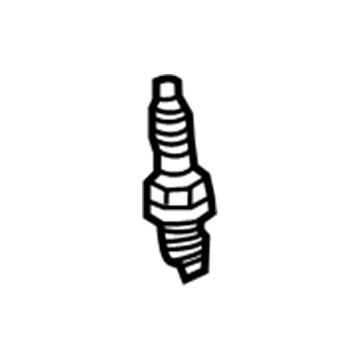
Mitsubishi Montero Spark Plug Part Number: MS851336
$10.21 MSRP: $13.31You Save: $3.10 (24%)Ships in 1-2 Business Days
Mitsubishi Montero Spark Plug Part Number: MR984943
$10.55 MSRP: $13.73You Save: $3.18 (24%)Ships in 1-2 Business Days
Mitsubishi Montero Spark Plug Part Number: MS851501
$15.07 MSRP: $19.61You Save: $4.54 (24%)Ships in 1-2 Business Days
Mitsubishi Montero Spark Plug Part Number: MD372553
$16.86 MSRP: $21.95You Save: $5.09 (24%)Ships in 1-2 Business Days
Mitsubishi Montero Spark Plug Part Number: MS851237
$2.37 MSRP: $3.09You Save: $0.72 (24%)Ships in 1-2 Business Days
Mitsubishi Montero Spark Plug
OEM Spark Plug can boast superior quality and long-term durability. Each part meets strict factory specs and passes careful checks in production. So you'll get Spark Plug with long-lasting strength and an exact fit. If you need OEM Mitsubishi Montero Spark Plug, the online store is the ideal place. The store carry a wide range of genuine Mitsubishi Montero parts at the highly competitive prices. You'll enjoy a simple and no-hassle shopping experience. You'll get unbeatable prices and fast delivery service. You'll get the manufacturer's warranty and a straightforward return policy. Shop with confidence and keep your car in top condition.
Mitsubishi Montero Spark Plug Parts Questions & Experts Answers
- Q:How to replace spark plugs on Mitsubishi Montero?A:To change spark plugs, first, purchase them following the suggested maintenance schedule and make sure that these are the right type based on your engine as shown in the Emission Control Information label under the hood. Assemble the tools required, such as a spark plug socket, extensions, a gap gauge as well as a torque wrench. Never remove the engine until fully cooled, and observe the new plugs, and check the clearance between them with a type of wire gauge, so that there is a small drag between the electrodes. Take away the Spark Plug Wire by pulling off the boot and blow away any debris in the spark plug hole with compressed air or a bicycle pump. With the spark plug socket, turn the old plug counterclockwise and remove it. Use reference images to compare the old plug with reference images to determine engine conditions. Insert a new plug into the hole by hand until it cannot be rotated further and then screw it in with a torque wrench or ratchet, with a short piece of rubber hose to help with this and avoiding cross-threading. Before connecting the spark plug wire to the new plug, verify that the spark plug wire is clean and then connect it to the new plug using a twisting action, repeat the process with the rest of the plugs and that they do not get mixed up.
Related Mitsubishi Montero Parts
 Mitsubishi Montero Brake Light Switch
 Mitsubishi Montero Distributor Cap
 Mitsubishi Montero Distributor Rotor
 Mitsubishi Montero Fuel Pump Relay
 Mitsubishi Montero Headlight Switch
 Mitsubishi Montero Ignition Coil
 Mitsubishi Montero Relay
 Mitsubishi Montero Spark Plug Wire
 Mitsubishi Montero Speed Sensor
 Mitsubishi Montero Temperature Sender
 Mitsubishi Montero Turn Signal Switch
 Mitsubishi Montero Vehicle Speed Sensor