×
- Hello
- Login or Register
- Quick Links
- Live Chat
- Track Order
- Parts Availability
- RMA
- Help Center
- Contact Us
- Shop for
- Mitsubishi Parts

My Garage
My Account
Cart
Genuine Mitsubishi Sigma Brake Line
Brake Hose- Select Vehicle by Model
- Select Vehicle by VIN
Select Vehicle by Model
orMake
Model
Year
Select Vehicle by VIN
For the most accurate results, select vehicle by your VIN (Vehicle Identification Number).
1 Brake Line found

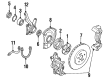
Mitsubishi Sigma Flex Hose Part Number: MR129781
$13.94 MSRP: $18.15You Save: $4.21 (24%)Ships in 1-2 Business Days
Mitsubishi Sigma Brake Line
OEM Brake Line can boast superior quality and long-term durability. Each part meets strict factory specs and passes careful checks in production. So you'll get Brake Line with long-lasting strength and an exact fit. If you need OEM Mitsubishi Sigma Brake Line, the online store is the ideal place. The store carry a wide range of genuine Mitsubishi Sigma parts at the highly competitive prices. You'll enjoy a simple and no-hassle shopping experience. You'll get unbeatable prices and fast delivery service. You'll get the manufacturer's warranty and a straightforward return policy. Shop with confidence and keep your car in top condition.
Mitsubishi Sigma Brake Line Parts Questions & Experts Answers
- Q:How should the brake line components, including metal lines and rubber brake hoses, be checked and replaced to ensure proper braking function on a Mitsubishi Sigma?A:It is essential to regularly examine the metal lines and rubber brake hoses for leaks and external damage. The metal lines are especially susceptible to crushing and kinking, which can impede the flow and cause the brakes to fail. Inspections for cracking or scraping damage must be made on rubber hoses as it could create weak spots that could fail under pressure. When lines are removed or disconnected, the area must be kept very clean as dirt can clog a fluid port and cause the brakes to fail. Before disassembly, clean all joints and connections. Plug lines and ports as soon as they are opened. Before installing any new lines or hoses, blow them or flush them clean. To replace a line or a hose, raise the car and support it safely on axle stands. If you need to remove parts of the vehicle to gain access to the line, take off the necessary wheels. Clean around the joints that you will be disconnecting. A catch pan shall be placed under the joint to minimize fluid spillage, either plug the vent hole in the reservoir cap or use a non-vented cap. Using two wrenches, disconnect the hose or line at one end, disconnect the other end as well as any clips or brackets that retain the hose. If the system will be open for a long duration, plug or tape the lines and ports to minimize dirt ingress. Fit the new line or hose, starting from the end farthest from the master cylinder. Both fittings must be correctly threaded and smooth. The newly installed line shall not rub against any other parts and shall be installed away from the steering column and either moving parts for a minimum of 13mm with all protective shield or insulators reinstalled to their original location. If there is a need to bend the new metal line, it should be done gently using a pipe bending tool to avoid kinking. Each fitting shall be tightened to 13-17 Nm or 9-12 ft. lbs. The clips or brackets which hold the system in place must be reinstalled, refill the brake reservoir, and if unvented replace the cap. The last step is bleeding the brake system starting from the wheel nearest to the replaced hose, followed by reinstalling the wheels and lowering the automobile to the ground.
Related Mitsubishi Sigma Parts
 Mitsubishi Sigma Axle Bearing Lock Rings
 Mitsubishi Sigma Brake Caliper Piston
 Mitsubishi Sigma Hydraulic Hose
 Mitsubishi Sigma Wheel Bearing
 Mitsubishi Sigma Wheel Cylinder Repair Kit