×
- Hello
- Login or Register
- Quick Links
- Live Chat
- Track Order
- Parts Availability
- RMA
- Help Center
- Contact Us
- Shop for
- Mitsubishi Parts

My Garage
My Account
Cart
Genuine Mitsubishi Sigma Valve Spring
- Select Vehicle by Model
- Select Vehicle by VIN
Select Vehicle by Model
orMake
Model
Year
Select Vehicle by VIN
For the most accurate results, select vehicle by your VIN (Vehicle Identification Number).
1 Valve Spring found

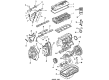
Mitsubishi Sigma Valve Springs Part Number: MD073398
$11.60 MSRP: $15.10You Save: $3.50 (24%)Ships in 1-2 Business Days
Mitsubishi Sigma Valve Spring
OEM Valve Spring can boast superior quality and long-term durability. Each part meets strict factory specs and passes careful checks in production. So you'll get Valve Spring with long-lasting strength and an exact fit. If you need OEM Mitsubishi Sigma Valve Spring, the online store is the ideal place. The store carry a wide range of genuine Mitsubishi Sigma parts at the highly competitive prices. You'll enjoy a simple and no-hassle shopping experience. You'll get unbeatable prices and fast delivery service. You'll get the manufacturer's warranty and a straightforward return policy. Shop with confidence and keep your car in top condition.
Mitsubishi Sigma Valve Spring Parts Questions & Experts Answers
- Q:What are the essential steps and considerations for removing and reinstalling engine components, particularly the Exhaust Valve, Intake Valve and Valve Spring on Mitsubishi Sigma?A:The vehicle must have the head removed from the engine or not run in the event of a head. To avoid mixing up the valves and components, which should be returned to their original positions, a system should be developed for storing and identifying them as they are removed, labeling them by position and application. Maintaining cleanliness of the work area and finding immediate storage will work fine. The appropriate special tools or their equivalents may be required to accomplish some procedures. Availability of other specialty tools, such as spring compressor, micrometer, reamer, etc., is doubtful. Early Mitsubishi engines such as the G15B, G32B, and G64B require the jet valve to be removed before the larger valves; use a special tool to avoid damaging the valve stem. Once the jet valve assembly is removed, a normal valve spring compressor should be fitted to compress the spring so that the valve spring retainers may be removed. Suitable cleaning, for carbon deposit removal, should be done at each valve. Inspection should be carried out for burning, distortion or corrosion. Extrusion Valve (extrusion) margin, I-section valve margin and spring height have been specified for various engine types. The squareness of valve springs should be checked and stem-to-guide clearance should be measured. The valve face and seat surfaces should contact across their whole surface. If necessary, the valve seat surfaces should be machined and lapped to achieve this. Jet valve service includes the dismantling of the assembly for inspection and the changing of the valve stem seal so that the valve will move smoothly upon installation. All parts must be cleaned and reinstalled in their original positions during reassembly. Special tools must be used for valve stem seals and spring seats to prevent oil consumption. The spring seat is placed, followed by inserting the valve. Then, the valve springs and keepers are fitted. The same fittings continue for each valve.
Related Mitsubishi Sigma Parts
 Mitsubishi Sigma Camshaft Seal
 Mitsubishi Sigma Crankshaft Thrust Washer
 Mitsubishi Sigma Oil Filler Cap
 Mitsubishi Sigma Oil Pan Gasket
 Mitsubishi Sigma Oil Pump Gasket
 Mitsubishi Sigma Rod Bearing
 Mitsubishi Sigma Timing Chain Tensioner
 Mitsubishi Sigma Valve Cover Gasket
 Mitsubishi Sigma Valve Lifter
 Mitsubishi Sigma Valve Spring Retainer
 Mitsubishi Sigma Valve Spring Retainer Keeper
 Mitsubishi Sigma Valve Stem Seal