×
- Hello
- Login or Register
- Quick Links
- Live Chat
- Track Order
- Parts Availability
- RMA
- Help Center
- Contact Us
- Shop for
- Mitsubishi Parts

My Garage
My Account
Cart
Genuine Mitsubishi Galant Oil Filter
Engine Oil filter- Select Vehicle by Model
- Select Vehicle by VIN
Select Vehicle by Model
orMake
Model
Year
Select Vehicle by VIN
For the most accurate results, select vehicle by your VIN (Vehicle Identification Number).
2 Oil Filters found
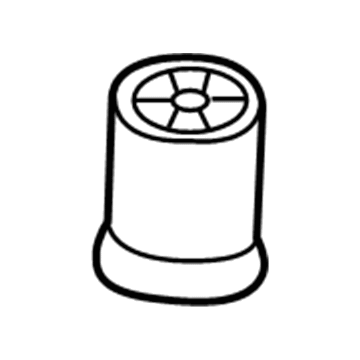
Mitsubishi Galant Oil Filter Part Number: MZ690116
$6.13 MSRP: $7.98You Save: $1.85 (24%)Ships in 1-2 Business Days
Mitsubishi Galant Oil Filter Part Number: MZ690072
$6.13 MSRP: $7.98You Save: $1.85 (24%)Ships in 1-2 Business Days
Mitsubishi Galant Oil Filter
The Mitsubishi Galant Oil Filter keeps the engine oil clean and allows it to easily flow through the powertrain. Oil Filter traps contaminants. Depending on the manufacturer, the media may consist of mainly cellulose, synthetic fibers, or a combination of both. The media are designed to achieve a balance between high filtration efficiency and unrestricted flow. The filters are rated for efficiency and capacity, meaning if they say 99 percent efficient, then ninety-nine of a hundred dirt particles that are thrown in are removed. The capacity determines how much dirt can be held until the next Oil Filter change. When capacity is reached, unfiltered oil can circulate. Therefore, the Oil Filter of every Mitsubishi motor in the Galant range must be replaced on time. Filters that are standard spin-on units and do not have adequate strength may be ruptured by high pressure or limit flow such that oil pressure drops and metal makes contact. The filter fitted to a Mitsubishi car must be able to withstand the output of the pump and the viscosity that the maker recommends. A Mitsubishi Galant filter collects wear particles, corrosion by-products, and sludge reliably without affecting circulation, thus preventing wear and maintaining performance. Ensuring that the component is serviced before it reaches its dirt holding capacity helps maintain essential clearances, which in turn enhances engine life of the Galant.
OEM Oil Filter can boast superior quality and long-term durability. Each part meets strict factory specs and passes careful checks in production. So you'll get Oil Filter with long-lasting strength and an exact fit. If you need OEM Mitsubishi Galant Oil Filter, the online store is the ideal place. The store carry a wide range of genuine Mitsubishi Galant parts at the highly competitive prices. You'll enjoy a simple and no-hassle shopping experience. You'll get unbeatable prices and fast delivery service. You'll get the manufacturer's warranty and a straightforward return policy. Shop with confidence and keep your car in top condition.
Mitsubishi Galant Oil Filter Parts Questions & Experts Answers
- Q:Why is frequent replacement of the Oil Filter crucial for preventive maintenance on Mitsubishi Galant?A:Periodic replacement of oil plays an essential role in preventive maintenance since an old engine oil becomes diluted and contaminated, causing an early wear. With every oil change, a new oil filter must be installed even when it is not recommended that a new filter be installed. Prior to beginning, prepare all required tools and materials, including a box end wrench or socket so as not to round off corners of the drain plug, clean rags and newspapers to use in case of spills. Elevate the car in front, with jackstands, and learn the locations of the oil drain plug and filter, taking into account any challenges that could be encountered by hot engine parts. Warm the engine to normal operating temperature, and use the time to assemble tools and check the proper type of oil. Place a drain pan beneath the drain plug that must be able to hold a minimum of 5 quarts and carefully remove the drain plug using a breaker bar or wrench with the assistance of an oil-resistant glove to avoid contact with hot oil. Let the oil drain out, changing the pan as needed but then wipe down the drain plug and the surrounding area and screw it back in and tighten it. Place the drain pan beneath the oil filter and loosen it with a filter wrench, being careful of tightness and accessibility problems. Take out the old filter, pouring its oil into the drain pan, and identify it with the new one. Wipe the area around the sealing of the engine and make sure that the rubber gasket of the old filter is not attached. Before attachment, apply a light layer of clean engine oil on the gasket of the new filter, and attach it, in accordance with the tightening recommendations of the manufacturer. Take away tools and materials under the vehicle and drop the vehicle. Removed the oil filler cap in the engine compartment and with a funnel pour the required amount of new oil into the engine. In a few minutes, check the level of the dipstick and when sufficient begin the engine to circulate the oil. Having run the engine a little, inspect at the drain plug and oil filter, and tighten, where necessary. Allow the oil to settle, re-read the dipstick, and add more oil as necessary, but do not fill up. Look at leaks and oil levels on the initial few trips following the change. Properly dispose of the old oil by consulting any local facilities on ways it can be recycled, and not to pour it on the ground or a drain.

Related Mitsubishi Galant Parts
 Mitsubishi Galant Oil Pan
 Mitsubishi Galant Belt Tensioner
 Mitsubishi Galant Crankshaft Pulley
 Mitsubishi Galant Crankshaft Seal
 Mitsubishi Galant Dipstick
 Mitsubishi Galant Harmonic Balancer
 Mitsubishi Galant Oil Drain Plug
 Mitsubishi Galant Oil Filter Gasket
 Mitsubishi Galant Oil Pump Gasket
 Mitsubishi Galant Rod Bearing
 Mitsubishi Galant Timing Belt Idler Pulley
 Mitsubishi Galant Timing Chain Tensioner
Browse by Year
2012 Oil Filter 2011 Oil Filter 2010 Oil Filter 2009 Oil Filter 2008 Oil Filter 2007 Oil Filter 2006 Oil Filter 2005 Oil Filter 2004 Oil Filter 2003 Oil Filter 2002 Oil Filter 2001 Oil Filter 2000 Oil Filter 1999 Oil Filter 1998 Oil Filter 1997 Oil Filter 1996 Oil Filter 1995 Oil Filter 1994 Oil Filter 1993 Oil Filter 1992 Oil Filter 1991 Oil Filter 1990 Oil Filter 1989 Oil Filter 1988 Oil Filter 1987 Oil Filter 1986 Oil Filter 1985 Oil Filter