×
- Hello
- Login or Register
- Quick Links
- Live Chat
- Track Order
- Parts Availability
- RMA
- Help Center
- Contact Us
- Shop for
- Mitsubishi Parts

My Garage
My Account
Cart
Genuine Mitsubishi Galant Spark Plug
Ignition Spark Plug- Select Vehicle by Model
- Select Vehicle by VIN
Select Vehicle by Model
orMake
Model
Year
Select Vehicle by VIN
For the most accurate results, select vehicle by your VIN (Vehicle Identification Number).
6 Spark Plugs found

Mitsubishi Galant Spark Plug Part Number: MS851357
$2.37 MSRP: $3.09You Save: $0.72 (24%)Ships in 1-2 Business Days
Mitsubishi Galant Spark Plug Part Number: 1822A002
$11.07 MSRP: $14.42You Save: $3.35 (24%)Ships in 1-2 Business Days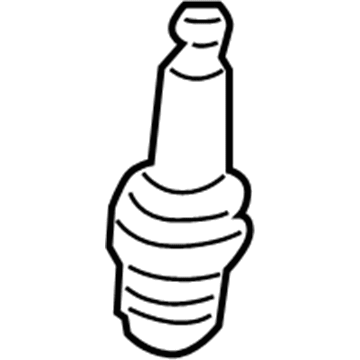
Mitsubishi Galant Spark Plug Part Number: MN158596
$12.40 MSRP: $16.12You Save: $3.72 (24%)Ships in 1-2 Business Days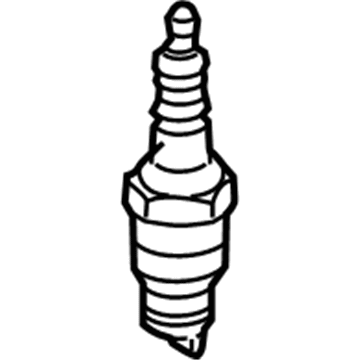
Mitsubishi Galant Spark Plug Part Number: MN163236
$19.70 MSRP: $25.65You Save: $5.95 (24%)Ships in 1-2 Business Days
Mitsubishi Galant Spark Plug Part Number: MD313443
$10.84 MSRP: $14.12You Save: $3.28 (24%)Ships in 1-2 Business DaysMitsubishi Galant Spark Plug Part Number: MD313442
$10.84 MSRP: $14.12You Save: $3.28 (24%)Ships in 1-2 Business Days
Mitsubishi Galant Spark Plug
OEM Spark Plug can boast superior quality and long-term durability. Each part meets strict factory specs and passes careful checks in production. So you'll get Spark Plug with long-lasting strength and an exact fit. If you need OEM Mitsubishi Galant Spark Plug, the online store is the ideal place. The store carry a wide range of genuine Mitsubishi Galant parts at the highly competitive prices. You'll enjoy a simple and no-hassle shopping experience. You'll get unbeatable prices and fast delivery service. You'll get the manufacturer's warranty and a straightforward return policy. Shop with confidence and keep your car in top condition.
Mitsubishi Galant Spark Plug Parts Questions & Experts Answers
- Q:What are the steps and tools necessary for replacing spark plugs on Mitsubishi Galant?A:Spark plugs are in the cylinder heads and accessed through long tubes in the top of the valve cover(s). Typically, you will require a spark plug socket that goes onto a ratchet and a range of extensions. Using a feeler gauge to check and adjust the spark plug gap can also be handy. A special tool for removing the plug wire can help to separate the wire boot from the spark plug but is not essential. Because of the aluminum cylinder head(s), spark plugs must be tightened using a torque wrench. You should get new spark plugs ahead of time and gap them to spec. Remove one plug at a time, install the correct replacement, and reconnect the plug to the engine before continuing. Let the engine completely cool down before removing any of the plugs during which time you can check the new plugs for defects and check the gaps. A suitable thickness gauge is used to check the gap between the electrodes at the plug tip. Adjustments are done wherever required. Do not check the gap on platinum- or iridium-tipped plugs. This may damage their coating. It is advisable to cover the fender with a protective material to prevent damage to the paint. The valve cover centre cover must be removed if applicable for 1994-1998 four-cylinder engines. Then the spark plug boot can be twisted and pulled off the spark plug. As one plug at a time is replaced, the wires won't get mixed up. On 1999 and later SOHC engines, the spark plug wires connect to coil-over spark plug units. Therefore, the wires must be detached from the coil pack before the plugs are removed. To gain access to the rear plug wires and access to the rear spark plugs on V6 engines, the upper intake manifold must be removed. Further, it is advisable to stuff clean rags in the lower intake manifold openings for security. First, detach any clips securing the wires of the spark plug. Second, twist to release the boot and pull it off. You can utilize compressed air to clear the dirt from the spark plug area and position the spark plug socket over the spark plug for removal. It is recommended to use anti-seize compound on new spark plugs. Use it sparingly on the threads so that the plugs will not seize in the aluminum cylinder head. Be careful not to apply any anti-seize on the electrode. To help prevent cross-threading, you can place a piece of rubber hose over the end of a spark plug to help align it with the hole. Once the spark plug has been installed and tightened to the proper torque specification, the plug wire or coil must be attached by twisting it until it is firmly seated. Continue in the same way with the rest of the spark plugs, replacing one at a time. For V6 models, before reinstallation of the upper intake manifold, the rags should be removed from the lower intake manifold.

Related Mitsubishi Galant Parts
 Mitsubishi Galant Ignition Coil
 Mitsubishi Galant Air Bag Sensor
 Mitsubishi Galant Clock Spring
 Mitsubishi Galant Distributor Cap
 Mitsubishi Galant Distributor Rotor
 Mitsubishi Galant Door Jamb Switch
 Mitsubishi Galant Horn
 Mitsubishi Galant Neutral Safety Switch
 Mitsubishi Galant Oil Pressure Switch
 Mitsubishi Galant Overload Relay
 Mitsubishi Galant Relay Boxes
 Mitsubishi Galant Spark Plug Wire