×
- Hello
- Login or Register
- Quick Links
- Live Chat
- Track Order
- Parts Availability
- RMA
- Help Center
- Contact Us
- Shop for
- Mitsubishi Parts

My Garage
My Account
Cart
Genuine Mitsubishi Lancer Drive Shaft
Axle Shaft- Select Vehicle by Model
- Select Vehicle by VIN
Select Vehicle by Model
orMake
Model
Year
Select Vehicle by VIN
For the most accurate results, select vehicle by your VIN (Vehicle Identification Number).
3 Drive Shafts found
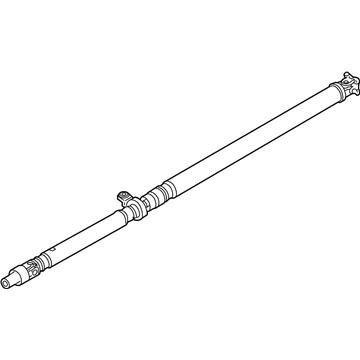
Mitsubishi Lancer Propeller Shaft Part Number: 3401A237
$1070.76 MSRP: $1396.03You Save: $325.27 (24%)Ships in 1-2 Business Days
Mitsubishi Lancer Propeller Shaft Part Number: 3401A147
$1531.66 MSRP: $1854.31You Save: $322.65 (18%)Ships in 1-2 Business Days
Mitsubishi Lancer Propeller Shaft Part Number: 3401A172
$1557.77 MSRP: $1885.91You Save: $328.14 (18%)Ships in 1-2 Business Days
Mitsubishi Lancer Drive Shaft
The Drive Shaft of the Mitsubishi Lancer transmits rotation to the axle in order to move the car forward. In a typical design, the Mitsubishi Lancer Drive Shaft is a hollow metal tube with end yokes containing flexible universal joints. The Drive Shaft joints allow for a change in angle of the Drive Shaft with the up and down movement of the suspension to ensure smooth delivery of power to the wheels as the Mitsubishi Lancer travels over uneven surfaces. As the operating angles become more acute, it is possible to substitute the standard universal joint with a double cardan joint or a constant-velocity joint to minimize vibrations and maintain a consistent motion. In cases where length or space restrictions make a single shaft impractical, some layouts may have a two-piece construction complemented with a center support bearing. The front section will be connected to the transmission and the rear section to the differential. It is important to keep the wheels well-balanced. Dents, missing balance weights, and dirt accumulation each cause vibration that worsens with speed. A lack of wear or lubrication in the universal joints may cause looseness, noise, or further imbalance. Joint angles that are applied accurately are also important as large angles may cause shudder at low speeds when heavily loaded. The Drive Shaft is an integral component of all Mitsubishi Lancer drive trains as it effectively transfers torque in a reliable manner under these conditions and with acceptable noise, vibration, and harshness levels.
OEM Drive Shaft can boast superior quality and long-term durability. Each part meets strict factory specs and passes careful checks in production. So you'll get Drive Shaft with long-lasting strength and an exact fit. If you need OEM Mitsubishi Lancer Drive Shaft, the online store is the ideal place. The store carry a wide range of genuine Mitsubishi Lancer parts at the highly competitive prices. You'll enjoy a simple and no-hassle shopping experience. You'll get unbeatable prices and fast delivery service. You'll get the manufacturer's warranty and a straightforward return policy. Shop with confidence and keep your car in top condition.
Mitsubishi Lancer Drive Shaft Parts Questions & Experts Answers
- Q:How should you remove and install a drive shaft on Mitsubishi Lancer?A:If the drive shafts are already damaged or worn out, it is usually more economical to have an exchange assembly installed by a drive shaft specialist. To detach and attach it, first remove the wheel cover if it is present and loosen the front wheel nuts. Proceed to remove the split pin securing the end of the drive shaft nut, then get an assistant to apply the brakes and loosen off the drive shaft nut about one turn without removing it completely. Raise the front of the vehicle and securely support on jack stands. Remove the drive shaft nut and withdraw the washer. Place a container below the transaxle and drain the transaxle oil. Ensure that sealing washer of the drain plug is serviceable and refit the drain plug. Loosen the castellated nut retaining the tie rod end to the steering knuckle, taking into mind that a self-locking nut has replaced the castellated nut in some models. Using a hammer or a ball joint separator, disconnect the tie rod end from the steering knuckle and remove the spring clip holding the brake hose. On certain models, remove the nut retaining the ball joint to the steering knuckle and disconnect in a similar manner. For other models, remove the steering knuckle's pinch nut and bolt for lower ball joint. Levering the lower control arm downward helps to separate the ball joint stud. Make sure to leave the steering in the straight ahead position when removing the drive shaft. Using a suitable puller, press the drive shaft through the hub assembly without damaging the drive shaft joint boot. If necessary, strike the assembly with a heavy copper/hide faced hammer to dislodge it. Using a wooden block, hold the suspension unit away from the transaxle to provide adequate working space while avoiding any damage to the drive shaft oil seal. Remove the drive shaft from the car and cover the hole in the transaxle to prevent dirt from entering. Discard the drive shaft snap ring. The installation procedure is a reversal of removal, ensuring the drive shaft joints and boots are usable, fitting a new snap ring, checking the transaxle oil seal for damage, and coating the steering knuckle inner oil seal with grease. Make sure the inner joint is properly seated in the transaxle, fit the drive shaft hub washer and nut, tighten the nut to the specified torque while an assistant applies the brakes and install a new split pin. Incorporate the requisite amount and kind of oil into transaxle lubrication. When renewing boots, it is essential to use the grease included in the repair kit. It is recommended to renew both drive shaft boots together. Take off the appropriate drive shaft, and the keepers, and pull the rubber boot back from the drive shaft inner joint. Take note of the where the inner joint housing is fixed, remove the large internal snap ring, and pull the trunnion and drive shaft assembly from the joint housing. Eliminate the surplus grease and the small retaining snap ring installed at the end of the drive shaft and then mark the installed position of the trunnion assembly and pull it off. Use a clean rag to wipe the inside of the joint housing, trunnion assembly, and drive shaft splines without solvent. When disassembling the drive shaft, mark the dynamic damper's installed position and remove the retaining clip. The outer joint boot retaining clip will need to be removed, and the rubber boot will be withdrawn and noted for its fitted position. Using the special grease supplied with the outer boot repair kit, remove as much old grease as possible from the outer drive shaft joint. Cover the splines on the inner end of the drive shaft with electrical tape and work the grease into the outer joint. Install the rubber boot over the shaft, fit and tighten the new small retaining clip, and where fitted install the dynamic damper. Place the small retaining clip and the new inner boot onto the drive shaft, then place the trunnion assembly and the small retaining snap ring. Placing the special grease in the inner joint housing, slide the joint housing onto the trunnion assembly and make sure it is seated properly. The large internal snap ring should be installed while excess grease is packed inside the rubber boot and the cavity inside the housing. Slide the rubber boot onto the inner joint housing and secure it with a small retaining clip. Remove surplus air from the boots and fit new large boot retaining clips to both rubber boots being replaced. Then tighten the clips appropriately before refitting the drive shaft.
Related Mitsubishi Lancer Parts
 Mitsubishi Lancer CV Joint
 Mitsubishi Lancer Axle Shaft
 Mitsubishi Lancer Axle Shaft Seal
 Mitsubishi Lancer CV Boot
 Mitsubishi Lancer Differential Bearing
 Mitsubishi Lancer Differential Cover
 Mitsubishi Lancer Differential Seal
 Mitsubishi Lancer Driveshaft Center Support Bearing
 Mitsubishi Lancer Pinion Bearing
 Mitsubishi Lancer Ring And Pinion
 Mitsubishi Lancer Universal Joint