- Hello
- Login or Register
- Quick Links
- Live Chat
- Track Order
- Parts Availability
- RMA
- Help Center
- Contact Us
- Shop for
- Mitsubishi Parts


Popular Genuine Mitsubishi Lancer Parts
- Body & Hardware Parts View More >
- Belts & Cooling Parts View More >
- Electrical Parts View More >
- Engine Parts View More >
- Air & Fuel Delivery Parts View More >
- Charging & Starting Parts View More >
- Emission Control & Exhaust Parts View More >
- Brakes Parts View More >
- Steering Parts View More >
- A/C & Heating Parts View More >
- Suspension Parts View More >
- Transmission Parts View More >













Why Buy Genuine Mitsubishi Lancer Parts From MitsubishiPartsGiant.com
Get the genuine Mitsubishi Lancer parts you need from MitsubishiPartsGiant.com! We sell Mitsubishi Lancer parts at wholesale prices to help you save money without sacrificing quality. Our online store has proudly offered OEM Mitsubishi Lancer parts, including Interior & Exterior Trim, with a focus on keeping your Mitsubishi Lancer running strong. We only stock original Mitsubishi Lancer parts, such as Headlights & Lighting of high quality and at affordable prices. To enable you to get the right Mitsubishi Lancer part fast, our site is tailored to be simple to navigate. Make the proper choice for every part listing which is accompanied with accurate information that will assist you. We offer expert advice on the phone, through chat, or by email with our experienced product specialists. All the personnel in the team are knowledgeable of Mitsubishi vehicles, and they are willing to assist. You can order your Mitsubishi Lancer parts, like Driveline & Axles from the comfort of your home and have them delivered to your front door. In case you need to exchange a Mitsubishi Lancer part, our RMA team will assist you in all the steps. Shop in a smart way, shop MitsubishiPartsGiant.com.
Mitsubishi Lancer came in 1973 and continued till 2024, lending the compact sedan a 51-year legacy melding reliable engineering with adaptive styling. Over the ten generations of the Mitsubishi Lancer, the car evolved from simple carbureted versions to fuel-injected platforms. Finally settling on 2.0-liter and 2.4-liter four-cylinder engines that produce 168 horsepower. The Ralliart turbo, on the flip-side, has 237 horsepower. The crisp five-speed manual or an efficient continuously variable transmission sends power to front wheels, while rear stabilizer bar ensures balanced handling. The exterior changes brought the addition of an aerodynamic nose, a new grille, projector headlights, and a Sportback and wagon version that increases cargo capacity. Interior enhancements introduced Bluetooth connectivity, a 6.1-inch touchscreen, and an optional premium audio system for passenger clarity and comfort. Safety features have made a considerable leap forward with the introduction of antilock brakes, stability control, side-impact airbags, and sensors that measure the force of an impact so that an airbag will deploy accordingly. Each generation of the Mitsubishi Lancer wound up being extremely durable. Steering, suspension, and other wear parts on the Lancer platform were configurable. Real Mitsubishi Lancer parts including brake assemblies, electronic modules, and body panels have factory fit. This means that, when a replacement is needed, these parts will fit correctly. The Mitsubishi Lancer is an enthusiast's choice for a motorsport heritage while urban commuters trust Mitsubishi Lancer for steady mileage. The final facelift sharpened the lines of the Mitsubishi Lancer while extending relevance to the market. As such, this Mitsubishi car has left production with a contemporary appearance, competent performance, and a cost structure that modern customers will find appeals when evaluating compact sedans.
Mitsubishi Lancer can develop trouble in the HVAC, transmission, and cooling systems on the vehicle as the age of the vehicle increases. In the cabin control system, the Mitsubishi Lancer could have a sticky temperature knob when the air blend door lever or air blend door link binds. Dirt in the track can make the control difficult to turn as well. If this problem persists, the HVAC temperature control assembly may also require replacement. In the drivetrain the Mitsubishi Lancer may get early failure of the automatic transmission. This can cause slipping, rough shifts, delayed movement or poor response when the Mitsubishi Lancer is changing parts. In many cases, the transmission requires major internal repair or replacement of the damaged parts. In the engine cooling system, Mitsubishi Lancer may over-heated due to failure of the radiator cooling fan controller. A failed controller can prevent the fan from operating at the appropriate time, and that can cause engine temperature to increase in the Lancer when the vehicle is in traffic or is idling. When these Mitsubishi faulty parts are detected early, the Lancer is more likely to maintain proper cabin temperature control, smoother shifting and stable engine cooling. Watching for these faulty parts early can help to protect Lancer performance and reduce the risk of further damage.
Mitsubishi Lancer Parts Questions & Answers
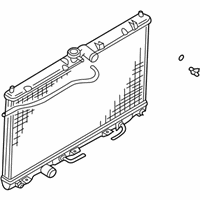
- Q:How to remove and reinstall a radiator on Mitsubishi Lancer?A:Disconnect negative battery post, empty cooling system, and fan wiring, hoses, and (where applicable) oil cooler lines. Take out mounting brackets and pull out radiator and fan. Flush using backward-flow of water and air until clean; seek expert advice in case of extreme obstruction. Install back, refill fluids, test leakage and fan functioning.
- Q:How to test and replace the fuel pump on Mitsubishi Lancer?A:To access and remove the fuel-pump connector, remove rear seat cushion and fold right carpet. Connect battery voltage to black/blue (1.5/1.8L) or red (2.0/2.4L) wire - audible pump and slight return-line vibration are indications of operation; otherwise check power/earth. CE models must have tank removal; CG/CH must have in-tank removal. Change seals, strainer and gaskets and reinstall.
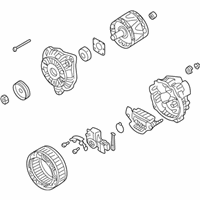
- Q:What features does the internal fan alternator have, and how does it function on Mitsubishi Lancer?A:Mitsubishi internal-fan alternator is equipped with brushes, slip rings, diode rectifier and built-in non-adjustable voltage regulator that regulates charging depending on battery condition. Rotor windings generate three-phase AC; diodes convert to DC. Note battery-negative earth, no shorts, unplug battery prior to charging. Ammeter/volt meter test; repair or replace out of range. Dismantling specialist repair.