×
- Hello
- Login or Register
- Quick Links
- Live Chat
- Track Order
- Parts Availability
- RMA
- Help Center
- Contact Us
- Shop for
- Mitsubishi Parts

My Garage
My Account
Cart
Genuine Mitsubishi Montero Drive Belt
Serpentine Belt- Select Vehicle by Model
- Select Vehicle by VIN
Select Vehicle by Model
orMake
Model
Year
Select Vehicle by VIN
For the most accurate results, select vehicle by your VIN (Vehicle Identification Number).
11 Drive Belts found
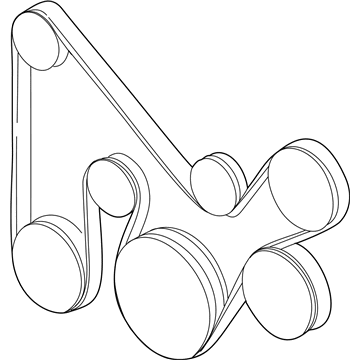
Mitsubishi Montero Serpentine Belt Part Number: MZ690271
$78.71 MSRP: $109.32You Save: $30.61 (28%)Ships in 1-2 Business DaysMitsubishi Montero Serpentine Belt Part Number: MN183597
$164.80 MSRP: $223.30You Save: $58.50 (27%)Ships in 1-2 Business Days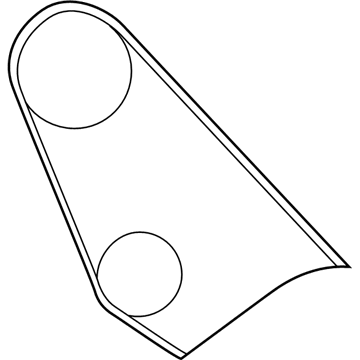
Mitsubishi Montero Power Steering Belt Part Number: MD308925
$22.20 MSRP: $28.90You Save: $6.70 (24%)Ships in 1-2 Business Days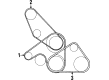
Mitsubishi Montero Alternator Belt Part Number: MD186126
$34.21 MSRP: $44.90You Save: $10.69 (24%)Ships in 1-2 Business Days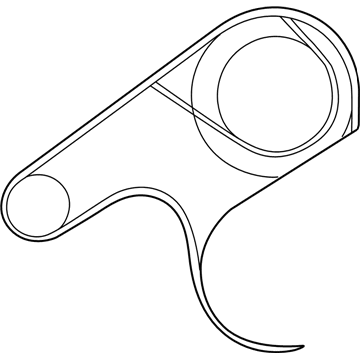
Mitsubishi Montero Alternator Belt Part Number: MZ690247
$36.56 MSRP: $47.98You Save: $11.42 (24%)Ships in 1-2 Business Days
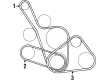
Mitsubishi Montero Alternator Belt Part Number: MD187462
$44.71 MSRP: $62.10You Save: $17.39 (28%)Ships in 1-2 Business DaysMitsubishi Montero A/C Belt Part Number: MB813344
$11.85 MSRP: $15.44You Save: $3.59 (24%)Ships in 1-2 Business DaysMitsubishi Montero Power Steering Belt Part Number: MD180581
$12.99 MSRP: $16.92You Save: $3.93 (24%)Ships in 1-2 Business DaysMitsubishi Montero Fan Belt Part Number: MZ690294
$13.95 MSRP: $18.17You Save: $4.22 (24%)Ships in 1-2 Business DaysMitsubishi Montero Power Steering Belt Part Number: MD185960
$16.51 MSRP: $21.50You Save: $4.99 (24%)Ships in 1-2 Business DaysMitsubishi Montero Belt Part Number: 7814A029
$20.08 MSRP: $26.15You Save: $6.07 (24%)Ships in 1-2 Business Days
Mitsubishi Montero Drive Belt
OEM Drive Belt can boast superior quality and long-term durability. Each part meets strict factory specs and passes careful checks in production. So you'll get Drive Belt with long-lasting strength and an exact fit. If you need OEM Mitsubishi Montero Drive Belt, the online store is the ideal place. The store carry a wide range of genuine Mitsubishi Montero parts at the highly competitive prices. You'll enjoy a simple and no-hassle shopping experience. You'll get unbeatable prices and fast delivery service. You'll get the manufacturer's warranty and a straightforward return policy. Shop with confidence and keep your car in top condition.
Mitsubishi Montero Drive Belt Parts Questions & Experts Answers
- Q:What is the importance of the accessory Drive Belt in engine operation and how should it be inspected and maintained on Mitsubishi Montero?A:The patented accessory drivebelts are located at the front of the engine and drive the water pump, the alternator, the power steering pump and the air conditioning compressor. The condition and tension of the drivebelts should be checked regularly for correct engine operation and accessory operation. When the tension is too high, the bearing will be worn while on lower tension will cause slippage, noise and vibration leading to belt failure. Due to their composition and the high stress they are exposed to, drivebelts stretch and deteriorate after a certain point. As a result, they require periodic checks and adjustments. The number and type, routing and style of belts that can be seen on the vehicle depend on the engine, model year and the accessories that are installed. In some cases, ordinary V-belts are used. In others, V-ribbed belts are employed. Sergeants belts that drive all the accessory are also quite frequently used. With the engine off, open the hood and use a flashlight to check for separation, cracks, fraying, and glazing on the belts in the engine bay. To carry out tension checks, a straightedge is laid across the belt's longest free span to measure deflection which is to be within specified limits. To adjust a serpentine belt, turn the adjusting screw on the tension pulley. Other belts require loosening the locking and pivot bolts on the accessory. Once adjustments are made, check tension and tighten bolts. To replace belts, you should loosen the belt so it slips off the grooves of the pulleys. It may be advisable to replace all belts at the same time. You will need to mark which belt and which grove it came off.
Related Mitsubishi Montero Parts
 Mitsubishi Montero Idler Pulley
 Mitsubishi Montero Coolant Reservoir
 Mitsubishi Montero Coolant Reservoir Hose
 Mitsubishi Montero Cooling Fan Assembly
 Mitsubishi Montero Cooling Fan Bracket
 Mitsubishi Montero Cooling Hose
 Mitsubishi Montero Oil Cooler Hose
 Mitsubishi Montero Radiator Drain Plug
 Mitsubishi Montero Radiator Hose
 Mitsubishi Montero Serpentine Belt
 Mitsubishi Montero V-Belt
 Mitsubishi Montero Water Pump Gasket
Browse by Year
2006 Drive Belt 2005 Drive Belt 2004 Drive Belt 2003 Drive Belt 2002 Drive Belt 2001 Drive Belt 2000 Drive Belt 1999 Drive Belt 1998 Drive Belt 1997 Drive Belt 1996 Drive Belt 1995 Drive Belt 1994 Drive Belt 1993 Drive Belt 1992 Drive Belt 1991 Drive Belt 1990 Drive Belt 1989 Drive Belt 1988 Drive Belt 1987 Drive Belt 1986 Drive Belt 1985 Drive Belt 1984 Drive Belt