×
- Hello
- Login or Register
- Quick Links
- Live Chat
- Track Order
- Parts Availability
- RMA
- Help Center
- Contact Us
- Shop for
- Mitsubishi Parts

My Garage
My Account
Cart
Genuine Mitsubishi Montero Fuel Pump
Gas Pump- Select Vehicle by Model
- Select Vehicle by VIN
Select Vehicle by Model
orMake
Model
Year
Select Vehicle by VIN
For the most accurate results, select vehicle by your VIN (Vehicle Identification Number).
2 Fuel Pumps found
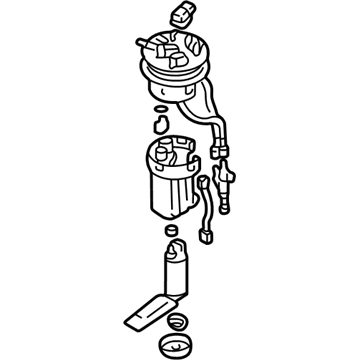
Mitsubishi Montero Fuel Pump Assembly Part Number: MR990884
$630.53 MSRP: $822.08You Save: $191.55 (24%)Ships in 1-2 Business Days
Mitsubishi Montero Fuel Pump Part Number: MB831691
$537.56 MSRP: $759.27You Save: $221.71 (30%)Ships in 1-2 Business Days
Mitsubishi Montero Fuel Pump
The role of the Mitsubishi Montero Fuel Pump involves transferring fuel from the tank to the injectors or carburetor by creating pressure in the fuel pipe. This pump arrangement illustrates Mitsubishi's dedication to providing consistent line pressure. In the Montero injected models, the electric pump is positioned inside the tank and a single combined assembly with the level-sending unit pressurizes the fuel before it reaches the injectors. Due to its submerged location, the distance between the fuel and pump is minimized, which helps maintain pressure. Simultaneously, the attached float transmits the level in the tank to the dashboard gauge. In Montero carburetor versions, a mechanically driven pump is mounted on the engine block. The lever on the mechanical unit tracks an eccentric on the camshaft. This mechanism draws fuel from the tank and sends it to the carburetor's float bowl at the low pressure suited to that system. The Fuel Pump moves fuel effectively when the Mitsubishi Montero is at idle and accelerating. The core structural differentiation of the electric design from the mechanical design is their mounting points and power sources. The electric style uses an internal electric motor fed from the vehicle's wiring while the mechanical style works through direct camshaft operation. Proper operation of the Fuel Pump is critical to Mitsubishi engine operation. Listening for Fuel Pump operation while cranking the engine, together with checking for voltage or pressure, will help confirm proper Fuel Pump operation.
OEM Fuel Pump can boast superior quality and long-term durability. Each part meets strict factory specs and passes careful checks in production. So you'll get Fuel Pump with long-lasting strength and an exact fit. If you need OEM Mitsubishi Montero Fuel Pump, the online store is the ideal place. The store carry a wide range of genuine Mitsubishi Montero parts at the highly competitive prices. You'll enjoy a simple and no-hassle shopping experience. You'll get unbeatable prices and fast delivery service. You'll get the manufacturer's warranty and a straightforward return policy. Shop with confidence and keep your car in top condition.
Mitsubishi Montero Fuel Pump Parts Questions & Experts Answers
- Q:How should the fuel pump be tested for correct pressure on Mitsubishi Montero?A:In models which use the carbureted type, the fuel pump must be tested to ensure that it is in proper pressure even when still in the car. Check the fuel pump pressure, assemble a T fitting, a hose length the same length as the inside of the fuel hoses, a fuel pressure gauge and a tachometer. Unscrew the hose clamp, and disconnect the hose on the fuel pump outlet fitting, and then insert one end of the T fitting into the hose that was removed and screw the clamp. Take a short piece of hose and one end and hook it on the T fitting and the other end on the fuel pump outlet fitting. Attach another piece of hose (approximately six inches) between the fuel pressure gauge and the remaining portion of the hose on the other end of the T fitting making sure that all connections are fastened with the hose clamps. Unscrew the fuel return hose of the carburetor and put a plugged short piece of hose in the hose. Install tachometer according to the instructions of the manufacturer. Turn the engine on and run it a little to get the air out of the pump to obtain an accurate pressure reading. Adjust the engine idle speed to the proper level then make a note of the pressure reading on the gauge. When switching off the engine watch the gauge; the pressure must not decrease, it should go back to normal gradually. In case the pressure goes beyond stipulated limits or decreases to zero immediately the engine is switched off, then the fuel pump is faulty and requires a replacement. In the case of fuel-injected models (2.4L), switch off ignition switch, open fuel tank filler cap, and place battery voltages in the fuel pump check connector, by hearing the whirring sound of the electric pump. To test the pressure of the fuel, squeeze the fuel high-pressure hose and see whether there is any sound; no sound indicates a faulty fuel pump or circuit. Check fuel pressure: To relieve the system pressure, disconnect the negative battery terminal, and reconnect the fuel pump electrical connector. Unscrew the high pressure fuel hose at the delivery pipe and wrap up the point with shop rags to prevent any leakage of fuel. Attach a fuel pressure gauge to the special adapter and connect it to the fuel delivery pipe. Reconnect battery terminal and place battery voltage on the fuel pump check connector, operating the pump and taking care not to leak on the gauge system. Turn on the engine to curb idle speed, use the vacuum hose and connect to the pressure regulator and compare the values. Disconnect the vacuum hose, plug it, test the fuel pressure once more and compare. Turn the engine on and off a couple of times and re-test the fuel pressure to make sure it is steady at idle. When revving the engine, squeeze the fuel return hose to check the fuel pressure; low flow will mean that there is a problem. Readings out of the given values should be checked in the table of troubleshooting to find what has caused it and do repairs. When the engine is switched off, ensure that the fuel pressure gauge reading is not decreasing; otherwise record the rate and consult the troubleshooting table. Lastly, discharge the system fuel pressure, pad the high-pressure hose connection with a towel to absorb any leaks, disassemble the hose, remove the gauge/adapter assembly, attach a new O-ring, reconnect the hose, and screw the screws. Connect battery voltage to the fuel pump post, pump it and verify the high pressure hose against leakages.
Related Mitsubishi Montero Parts
 Mitsubishi Montero Air Filter
 Mitsubishi Montero Fuel Filter
 Mitsubishi Montero Fuel Tank
 Mitsubishi Montero Intake Manifold
 Mitsubishi Montero Mass Air Flow Sensor
 Mitsubishi Montero Air Filter Box
 Mitsubishi Montero Fuel Filler Hose
 Mitsubishi Montero Fuel Filler Neck
 Mitsubishi Montero Fuel Hose
 Mitsubishi Montero Fuel Pump Gasket
 Mitsubishi Montero Fuel Tank Vent Valve
 Mitsubishi Montero Throttle Position Sensor