×
- Hello
- Login or Register
- Quick Links
- Live Chat
- Track Order
- Parts Availability
- RMA
- Help Center
- Contact Us
- Shop for
- Mitsubishi Parts

My Garage
My Account
Cart
Genuine Mitsubishi Montero Oil Filter
Engine Oil filter- Select Vehicle by Model
- Select Vehicle by VIN
Select Vehicle by Model
orMake
Model
Year
Select Vehicle by VIN
For the most accurate results, select vehicle by your VIN (Vehicle Identification Number).
2 Oil Filters found
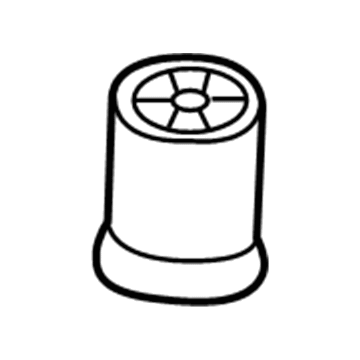
Mitsubishi Montero Oil Filter Part Number: MZ690116
$6.13 MSRP: $7.98You Save: $1.85 (24%)Ships in 1-2 Business Days
Mitsubishi Montero Oil Filter Part Number: MZ690072
$6.13 MSRP: $7.98You Save: $1.85 (24%)Ships in 1-2 Business Days
Mitsubishi Montero Oil Filter
The functionality of the Mitsubishi Montero Oil Filter is to filter engine oil and keep it clean while circulating it in all engine components. The efficiency figure near 99 percent indicates that 99 out of 100 particles entering the element are removed. The Oil Filter utilizes proprietary media made from either cellulose, synthetic fibers, or a more advanced media in its metal canister to trap contaminants. The Mitsubishi component in question must maintain the free flow of oil without collapsing because of long service intervals. The filter must feature adequate internal capacity to hold on to those particles until the next oil change so that it does not block the flow. The strength is also important since high operating pressure and thousands of service miles can crush a weak element or burst thin walls, resulting in a sudden loss of pressure and unprotected metal-to-metal contact. Since the standard spin-on designs lack strength or flow tolerance, they are sometimes seen to fail in the high-output environment, so the official Mitsubishi specification selected for units fitted to the Montero balances durability, flow rate, and contaminant storage to suit the everyday driving demand of the Montero's lubrication system. As even high-grade oil can wear down, replacing the Oil Filter at every service interval guarantees the product's media capacity and consistent oil quality. Following recommended service timing minimizes wear, corrosion, and sludge build-up of the Mitsubishi engine. Subsequently, fit a new Montero Oil Filter to restore full debris-holding capacity for the next cycle.
OEM Oil Filter can boast superior quality and long-term durability. Each part meets strict factory specs and passes careful checks in production. So you'll get Oil Filter with long-lasting strength and an exact fit. If you need OEM Mitsubishi Montero Oil Filter, the online store is the ideal place. The store carry a wide range of genuine Mitsubishi Montero parts at the highly competitive prices. You'll enjoy a simple and no-hassle shopping experience. You'll get unbeatable prices and fast delivery service. You'll get the manufacturer's warranty and a straightforward return policy. Shop with confidence and keep your car in top condition.
Mitsubishi Montero Oil Filter Parts Questions & Experts Answers
- Q:Why is frequent replacement of the Oil Filter crucial for preventive maintenance on Mitsubishi Montero?A:Depending on a vehicle's age, regular oil changes are an essential part of preventive maintenance. Engine oil can become diluted and contaminated over time, ultimately resulting in premature wear of engine components. Some people might say that you should change your oil filter every other oil change, but the low cost and ease of installing a new one are both worthy of changing it each time. Gather together all the tools and materials before you begin. You should have clean rags and newspapers to soak up spills. It is easier to get underneath a vehicle if it is up on a hoist, driven on to ramps or supported on jack stands. Get to know where the oil drain plug and oil filter are located, avoiding hot engine and exhaust components. Put the engine at normal operating temperature and during that time, gather any other tools that you need or oil. When the engine oil is warm, raise and support the vehicle safely and position the drain pan below the drain plug. With your wrench, slowly undo and remove the drain plug. Allow all the old oil to drain into the pan. Before putting it back in, wipe off the drain plug. Place the drain pan underneath the oil filter. Using a filter wrench, gently loosen the filter. Be careful of the oil in the filter. Before installing the new filter, compare it with the old one to ensure they match, then clean the mounting area and see if any rubber gaskets are stuck there. Before putting the new filter on the engine, smear a light coat of renew oil on the filter gasket. Tighten to the manufacturer's specification. Once you have removed all tools and rags from under the vehicle, lower the vehicle. Find the oil filler cap in the engine compartment. Put three or four quarts of fresh oil into engine, wait a few minutes and check dip stick for the oil level. If the level goes beyond the L mark, start the engine to allow the new oil to circulate. After a brief period, check for leaks at the oil pan drain plug and oil filter. After the new oil has circulated, check the dipstick again and add oil as needed. In the case of a leak, check the oil level after the first few rides and top it up if necessary. The expired oils are cannot be reused but take them to an oil reclamation centre, auto repair shop, or gas stations that do accept used oil.

Related Mitsubishi Montero Parts
 Mitsubishi Montero Belt Tensioner
 Mitsubishi Montero Cam Gear
 Mitsubishi Montero Crankshaft Gear
 Mitsubishi Montero Dipstick
 Mitsubishi Montero Harmonic Balancer
 Mitsubishi Montero Oil Filler Cap
 Mitsubishi Montero Oil Filter Gasket
 Mitsubishi Montero Oil Pump
 Mitsubishi Montero Rod Bearing
 Mitsubishi Montero Timing Chain Guide
 Mitsubishi Montero Timing Cover
 Mitsubishi Montero Valve Cover Gasket
Browse by Year
2006 Oil Filter 2005 Oil Filter 2004 Oil Filter 2003 Oil Filter 2002 Oil Filter 2001 Oil Filter 2000 Oil Filter 1999 Oil Filter 1998 Oil Filter 1997 Oil Filter 1996 Oil Filter 1995 Oil Filter 1994 Oil Filter 1993 Oil Filter 1992 Oil Filter 1991 Oil Filter 1990 Oil Filter 1989 Oil Filter 1988 Oil Filter 1987 Oil Filter 1986 Oil Filter 1985 Oil Filter 1984 Oil Filter