×
- Hello
- Login or Register
- Quick Links
- Live Chat
- Track Order
- Parts Availability
- RMA
- Help Center
- Contact Us
- Shop for
- Mitsubishi Parts

My Garage
My Account
Cart
Genuine Mitsubishi Starter
Starter Ignition- Select Vehicle by Model
- Select Vehicle by VIN
Select Vehicle by Model
orMake
Model
Year
Select Vehicle by VIN
For the most accurate results, select vehicle by your VIN (Vehicle Identification Number).
9 Starters found
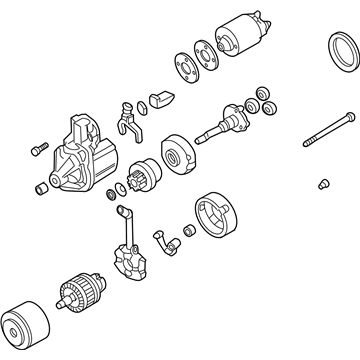
Mitsubishi Starter Part Number: 1810A205
$439.31 MSRP: $620.50You Save: $181.19 (30%)Ships in 1-2 Business DaysProduct Specifications- Other Name: Starter Assembly, 1.3KW; Remanufactured Starter Motor; Starter Motor Reman; Starter Motor
- Replaced by: 23300W100P
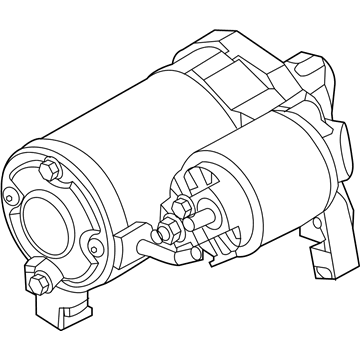
Mitsubishi Starter Part Number: 1810A333
$521.25 MSRP: $736.23You Save: $214.98 (30%)Ships in 1-2 Business DaysProduct Specifications- Other Name: Starter Assembly; Remanufactured Starter Motor; Remanufactured Starter; Starter Motor
- Replaced by: 23300W140P
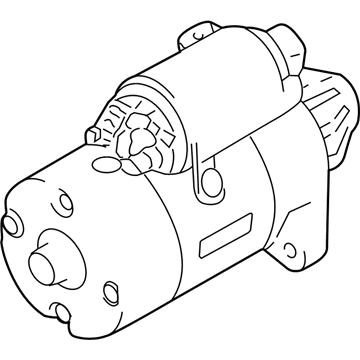
Mitsubishi Starter Part Number: M309471D
$144.25 MSRP: $195.47You Save: $51.22 (27%)Ships in 1-2 Business DaysProduct Specifications- Other Name: Remanufactured Starter
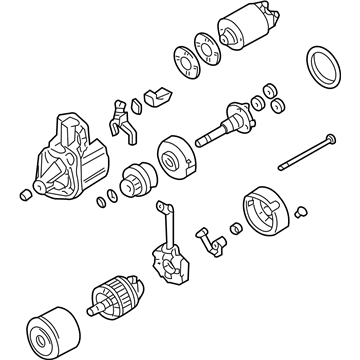
Mitsubishi Starter Part Number: 1810A098
$629.93 MSRP: $821.29You Save: $191.36 (24%)Ships in 1-2 Business DaysProduct Specifications- Other Name: Starter Assembly(1.2KW); Starter Motor
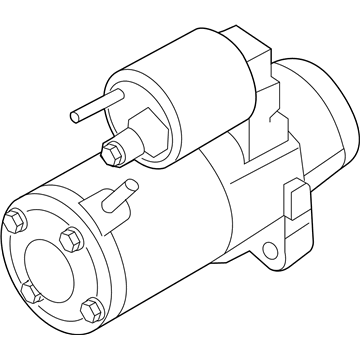
Mitsubishi Starter Part Number: 1810A380
$643.09 MSRP: $838.45You Save: $195.36 (24%)Ships in 1-2 Business DaysProduct Specifications- Other Name: Starter Assembly; Starter Motor
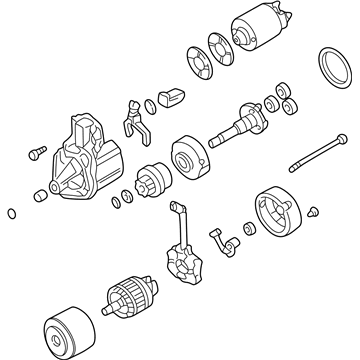
Mitsubishi Starter Part Number: MN137718
$705.16 MSRP: $919.37You Save: $214.21 (24%)Ships in 1-2 Business DaysProduct Specifications- Other Name: Starter Assembly; Remanufactured Starter Motor; Remanufactured Starter; Starter Motor Reman; Starter Motor
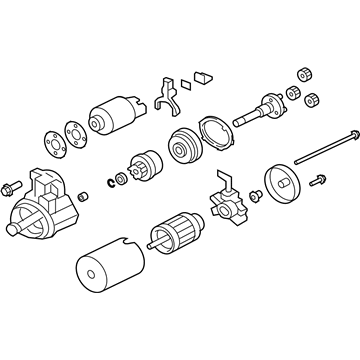
Mitsubishi Starter Part Number: 1810A184
$736.63 MSRP: $960.40You Save: $223.77 (24%)Ships in 1-2 Business DaysProduct Specifications- Other Name: Starter Assembly; Remanufactured Starter Motor; Starter Motor Reman; Starter Motor
Mitsubishi Starter Part Number: 1810A342
$745.30 MSRP: $971.71You Save: $226.41 (24%)Ships in 1-2 Business DaysProduct Specifications- Other Name: Starter Assembly; Starter Motor
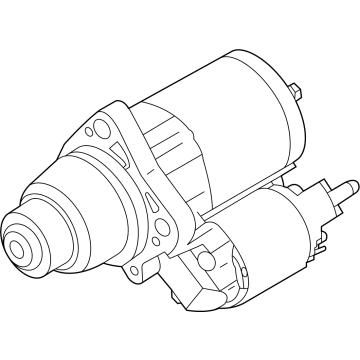
Mitsubishi Starter Part Number: 1810A249
$1279.30 MSRP: $1667.92You Save: $388.62 (24%)Ships in 1-2 Business DaysProduct Specifications- Other Name: Starter Assembly
Mitsubishi Starter
Mitsubishi Starter takes battery power and converts it quickly into twisting power that cranks the engine and gives each driver a fast start, even on cold mornings. Encased within a sealed housing is a compact armature, field coils, brushes, and overrunning clutch that operate so the motor generates high rpm and then hands off smooth torque to the flywheel and releases as soon as combustion catches so components don't overspeed. An electromagnetic solenoid pulls the drive gear forward only when a current is passed through heavy cables. The electrical and mechanical timing are synchronized for a reliable start every time. Control circuit safety switches prevent engagement unless the transmission is in park or neutral or the clutch pedal is pressed to ensure safe operation. Though this Starter only does one job, the bigger Mitsubishi family provides the environment in which it works. Since 1917, the company has consistently striven for practical innovations. Starting with the Model A and continuing with SUVs equipped with MIVEC engines, Super All Wheel Control and smartphone link, it provides confidence and ease of use for everyday owners. Mitsubishi produces vehicles that are equally adept at driving down rocky roads, rough streets, and in snow by combining solid hardware with user-friendly tech. The Starter is a steadfast representation of the brand philosophy of reliable power, permanent usability, and long lasting value. Every vehicle the Starter is made for can immediately wake up ready for the drive ahead.
Pick genuine OEM Starter if you want superb performance and durability that lasts. Mitsubishi builds that using high-grade materials and official factory techniques to meet very strict standards. This means you get parts you can actually trust for your daily drive. Finding the right parts is simple in the massive stock of genuine inventory. You can stop guessing if a part will fit or hold up. You will love the low prices, dependable service and the real manufacturer's warranty on Mitsubishi Starter. Order today and the store will ship your brand-new items to your door as fast as possible.
Mitsubishi Starter Parts Questions & Experts Answers
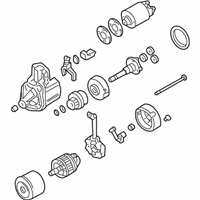
- Q:What is the function and troubleshooting process of a starter motor on Mitsubishi Lancer?A:The Starter is an induced pole type which has a frame, field coils with 4 pole shoes and 4 brushes. The solenoid switch is mounted on the starter drive end bracket. The overrunning clutch and drive pinion assembly is connected to a solenoid plunger by a lever and a pivot. The energization of the solenoid windings causes the plunger to engage the flywheel ring gear with the pinion assembly while simultaneously closing the switch that connects the battery to the Starter's field coils and the armature. Upon the ignition of the engine, the over-running clutch prevents the Starter armature from rotating at high speeds. Otherwise, if the solenoid is not de-energized quickly, this would endanger the Starter armature. If the Starter is not working, check the battery condition and charge, clean the battery terminals, and tight and clean earth connections. If the headlamps dim with the switch at the start position, a short circuit or high resistance is present. If the headlamps do not dim, the cause can be dirty solenoid contacts or an open circuit. Check the external wiring for damage, and if necessary, remove and service the starter. To remove the Starter, disconnect the negative terminal of the battery; if necessary, remove the air cleaner intake duct; disconnect the B+ terminal and wiring from the solenoid; and withdraw the Starter. During installation, follow the process in reverse and ensure strong wires and bolts. When testing outside the vehicle, clamp the Starter in a vice, connect jumper leads from the solenoid to the battery, and test operation. Further tests can confirm whether the solenoid or the motor is faulty if the Starter does not operate. Typically, the defective component is renewed, or an exchange unit is installed if a more general problem. Individuals with the proper skill and knowledge can refer to a stripped down view of the Starter.
Related Mitsubishi Parts
 Mitsubishi Car Battery
 Mitsubishi Starter Solenoid
 Mitsubishi Voltage Regulator
 Mitsubishi Alternator Pulley
 Mitsubishi Alternator Bearing
 Mitsubishi Alternator Bracket
 Mitsubishi Battery Cable
 Mitsubishi Battery Hold Downs
 Mitsubishi Battery Sensor
 Mitsubishi Battery Tray
 Mitsubishi Ground Cables
 Mitsubishi Starter Drive Gear