×
- Hello
- Login or Register
- Quick Links
- Live Chat
- Track Order
- Parts Availability
- RMA
- Help Center
- Contact Us
- Shop for
- Mitsubishi Parts

My Garage
My Account
Cart
Genuine Mitsubishi Galant Intake Manifold
Engine Intake Manifold- Select Vehicle by Model
- Select Vehicle by VIN
Select Vehicle by Model
orMake
Model
Year
Select Vehicle by VIN
For the most accurate results, select vehicle by your VIN (Vehicle Identification Number).
4 Intake Manifolds found
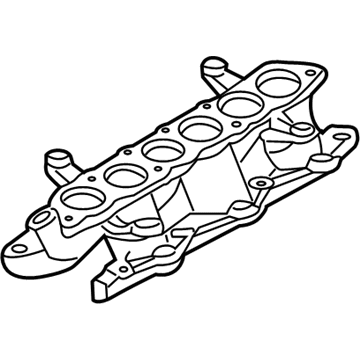
Mitsubishi Galant Intake Manifold Part Number: 1540A084
$327.27 MSRP: $462.25You Save: $134.98 (30%)Ships in 1-2 Business Days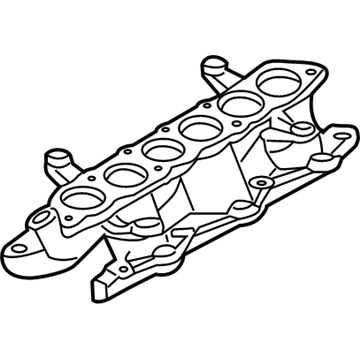
Mitsubishi Galant Intake Plenum Part Number: 1542A021
$570.52 MSRP: $805.82You Save: $235.30 (30%)Ships in 1-2 Business Days
Mitsubishi Galant Intake Manifold Part Number: 1540A182
$491.41 MSRP: $694.08You Save: $202.67 (30%)Ships in 1-2 Business DaysMitsubishi Galant Intake Manifold Part Number: MN156426
$496.76 MSRP: $701.63You Save: $204.87 (30%)Ships in 1-2 Business Days
Mitsubishi Galant Intake Manifold
The Mitsubishi Galant Intake Manifold channels air or the air-fuel mixture that leaves the throttle body to the intake ports found on the cylinder heads of the engine. This Galant Intake Manifold balanced delivery promotes steady power. Within the manifold, a tubing system ensures every cylinder gets its proper share of flow. If one receives too much and another too little, the engine will not run smoothly. Regardless of whether the Mitsubishi engine employs carburetion, throttle body injection, multiport injection, or gasoline direct injection, the function of the component is to direct a mixed charge or clean air according to where in the system the fuel enters. Many manifolds are made of upper and lower sections sealed by gaskets and bolts, and airtight joints prevent lean mixtures that impact operation. The Intake Manifold generally contains coolant channels that may contain the thermostat, while the assembly may locate various sensors, such as the engine coolant temperature or air charge temperature units. The signals from these sensors aid the computers in modifying operating conditions. Building materials for the engine have moved away from cast iron or aluminum to a lighter composite plastic that dissipates heat quickly. This helps to maintain cooler intake air for efficient combustion. The unit can also cover the valley between cylinder banks on V-type engines. There are end seals that must block oil leaks. The Mitsubishi Galant comprises an integrated Intake Manifold design that incorporates flow optimization, structural supports, and earth sensor mounting in one component and supports reliable engine function for the Mitsubishi Galant line while keeping weight low and temperature control high through sophisticated material choices.
OEM Intake Manifold can boast superior quality and long-term durability. Each part meets strict factory specs and passes careful checks in production. So you'll get Intake Manifold with long-lasting strength and an exact fit. If you need OEM Mitsubishi Galant Intake Manifold, the online store is the ideal place. The store carry a wide range of genuine Mitsubishi Galant parts at the highly competitive prices. You'll enjoy a simple and no-hassle shopping experience. You'll get unbeatable prices and fast delivery service. You'll get the manufacturer's warranty and a straightforward return policy. Shop with confidence and keep your car in top condition.
Mitsubishi Galant Intake Manifold Parts Questions & Experts Answers
- Q:How to remove and install the intake manifold and its components in the four-cylinder engine on Mitsubishi Galant?A:Before removing the components, relieve the fuel system pressure, disconnect the negative battery terminal, and drain the engine cooling system. After that, take out the air intake hose and disconnect the accelerator cable and the cruise control cable from the throttle lever arm. To remove the fuel rail and injectors, the sensor electrical connectors will first be unearthed. This fuel rail is attached to the operation pressure regulator and injectors. The fuelling rail and injectors will be taken out as one. The breather hose and PCV valve will be removed. Remove the EGA pipe and bolts. Disconnect the ignition coil harness connector, vacuum lines, heater hoses, ignition power transistor, and coils. When replacing or servicing the inlet manifold, remove the throttle body, knock off the inlet manifold support bracket, fasteners and the inlet manifold. When dealing with the 2.4L SOHC engine, the electrical connectors can be unplugged. The vacuum line can be removed as well. Further, the throttle body and fuel rail assembly can be disconnected as well. Unplug the electrical connector from the air conditioning switch and unbolt the wiring harness bracket to take off the thermostat housing assembly. On older models, you will need to unplug the connectors for the EGA valve and the Purge Solenoid Valve, then pull out the dipstick and its tube. Remove and disconnect the PCV hose and EGA valves, then undo the bolts of the intake manifold support bracket and remove the manifold. Using a straightedge and feeler gauge, inspect the intake manifold mating surface for warpage. Resurface or replace the intake manifold mating components as necessary. Use a new intake manifold gasket and place the manifold. Hand-tighten fasteners, then tighten to specification gradually and evenly with a torque wrench. Lastly, top off the cooling system, start up the engine, and check its operation.
Related Mitsubishi Galant Parts
 Mitsubishi Galant Air Filter
 Mitsubishi Galant Fuel Filter
 Mitsubishi Galant Fuel Tank
 Mitsubishi Galant Throttle Body
 Mitsubishi Galant Throttle Position Sensor
 Mitsubishi Galant Air Filter Box
 Mitsubishi Galant Fuel Injector
 Mitsubishi Galant Fuel Pressure Regulator
 Mitsubishi Galant Fuel Tank Lock Ring
 Mitsubishi Galant Idle Control Valve
 Mitsubishi Galant Intake Manifold Gasket
 Mitsubishi Galant Mass Air Flow Sensor