×
- Hello
- Login or Register
- Quick Links
- Live Chat
- Track Order
- Parts Availability
- RMA
- Help Center
- Contact Us
- Shop for
- Mitsubishi Parts

My Garage
My Account
Cart
Genuine Mitsubishi Galant Speed Sensor
Speed Control Sensor- Select Vehicle by Model
- Select Vehicle by VIN
Select Vehicle by Model
orMake
Model
Year
Select Vehicle by VIN
For the most accurate results, select vehicle by your VIN (Vehicle Identification Number).
8 Speed Sensors found
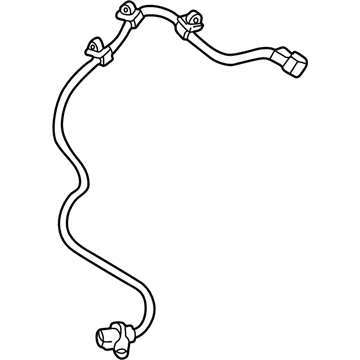
Mitsubishi Galant Front Speed Sensor, Driver Side Part Number: MR370932
$43.39 MSRP: $60.27You Save: $16.88 (29%)Ships in 1-2 Business DaysMitsubishi Galant Front Speed Sensor, Passenger Side Part Number: MR370933
$48.13 MSRP: $66.85You Save: $18.72 (28%)Ships in 1-2 Business Days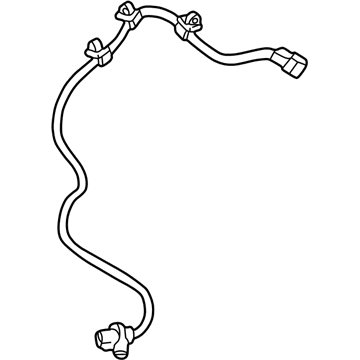
Mitsubishi Galant ABS Sensor, Passenger Side Part Number: 4670A372
$57.43 MSRP: $79.77You Save: $22.34 (29%)Ships in 1-2 Business DaysMitsubishi Galant ABS Sensor, Driver Side Part Number: 4670A371
$57.43 MSRP: $79.77You Save: $22.34 (29%)Ships in 1-2 Business Days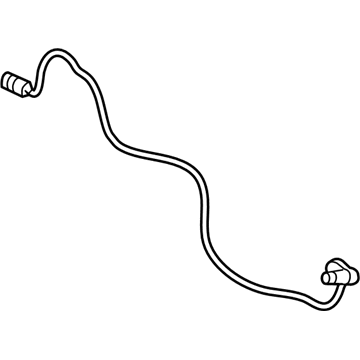
Mitsubishi Galant Rear Speed Sensor, Driver Side Part Number: 4670A379
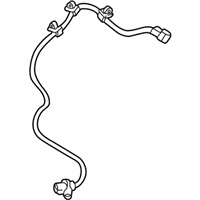
$78.61 MSRP: $109.18You Save: $30.57 (28%)Ships in 1-2 Business DaysMitsubishi Galant Rear Speed Sensor, Passenger Side Part Number: 4670A374
$80.44 MSRP: $111.72You Save: $31.28 (28%)Ships in 1-2 Business DaysMitsubishi Galant Rear Speed Sensor, Driver Side Part Number: 4670A373
$80.44 MSRP: $111.72You Save: $31.28 (28%)Ships in 1-2 Business Days
Mitsubishi Galant Vehicle Speed Sensor Part Number: MB622090
$124.23 MSRP: $168.33You Save: $44.10 (27%)Ships in 1-2 Business Days
Mitsubishi Galant Speed Sensor
OEM Speed Sensor can boast superior quality and long-term durability. Each part meets strict factory specs and passes careful checks in production. So you'll get Speed Sensor with long-lasting strength and an exact fit. If you need OEM Mitsubishi Galant Speed Sensor, the online store is the ideal place. The store carry a wide range of genuine Mitsubishi Galant parts at the highly competitive prices. You'll enjoy a simple and no-hassle shopping experience. You'll get unbeatable prices and fast delivery service. You'll get the manufacturer's warranty and a straightforward return policy. Shop with confidence and keep your car in top condition.
Mitsubishi Galant Speed Sensor Parts Questions & Experts Answers
- Q:What is the purpose and function of the anti-lock brake system and what role does the Speed Sensor play on Mitsubishi Galant?A:The fundamental purpose of the anti-lock brake system is to ensure steerability, directional stability and deceleration of optimum value to the vehicle during hard braking operations performed on severe road surfaces. The system continuously monitors the rotation speed of each wheel. It includes 3 main parts wheel speed sensors electronic control unit ECU hydraulic unit. The control unit receives variable voltage signals from each of the four wheel speed sensors. It monitors these signals to check whether any of the wheels are about to lock up. The hydraulic unit can then reduce the brake pressure via electrically operated solenoid valves. When there is problem with the ABS system, a warning light "ABS" will glow on the dashboard of the vehicle. Power loss is usually due to defective wiring harness. Most of the ABS wiring harnesses have undergone wear and tear due to chafing or damage. Therefore, visually check removable wiring harnesses close to wheel area. Preliminary checks for troubleshooting may include checking the level of the brake fluid, verifying secure electrical connections, checking fuses, and inspecting wiring harnesses. If you find that these inspections do not help, it is advised to get it checked by a technician. To remove or install the wheel speed sensor, you must first loosen the wheel lugs followed by raising and removing the wheel. With the ignition switched off, trace and disconnect the sensor wiring, disconnect the electrical connector, and remove the mounting bolt to take out the sensor. The process of reinstallation is in reverse order that creates the mounting bolt of the attachment to secures.
Related Mitsubishi Galant Parts
 Mitsubishi Galant Fuel Pump Relay
 Mitsubishi Galant ABS Relay
 Mitsubishi Galant Air Bag Sensor
 Mitsubishi Galant Cruise Control Switch
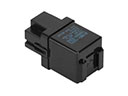 Mitsubishi Galant Flasher Relay
 Mitsubishi Galant Hazard Warning Switch
 Mitsubishi Galant Instrument Cluster
 Mitsubishi Galant Relay
 Mitsubishi Galant Relay Block
 Mitsubishi Galant Seat Belt
 Mitsubishi Galant Temperature Sender
 Mitsubishi Galant Vehicle Speed Sensor
Browse by Year
2012 Speed Sensor
2011 Speed Sensor
2010 Speed Sensor
2009 Speed Sensor
2008 Speed Sensor
2007 Speed Sensor
2006 Speed Sensor
2005 Speed Sensor
2004 Speed Sensor
2003 Speed Sensor 2002 Speed Sensor 2001 Speed Sensor 2000 Speed Sensor 1999 Speed Sensor 1996 Speed Sensor 1995 Speed Sensor 1994 Speed Sensor