×
- Hello
- Login or Register
- Quick Links
- Live Chat
- Track Order
- Parts Availability
- RMA
- Help Center
- Contact Us
- Shop for
- Mitsubishi Parts

My Garage
My Account
Cart
Genuine Mitsubishi Lancer Water Pump
H2O Pump- Select Vehicle by Model
- Select Vehicle by VIN
Select Vehicle by Model
orMake
Model
Year
Select Vehicle by VIN
For the most accurate results, select vehicle by your VIN (Vehicle Identification Number).
5 Water Pumps found
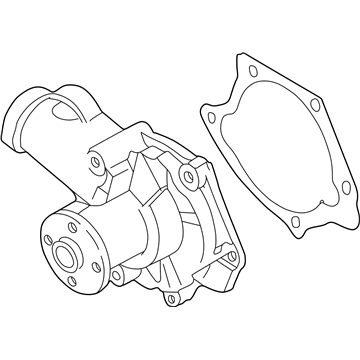
Mitsubishi Lancer Water Pump Part Number: 1300A066
$260.77 MSRP: $368.31You Save: $107.54 (30%)Ships in 1-2 Business Days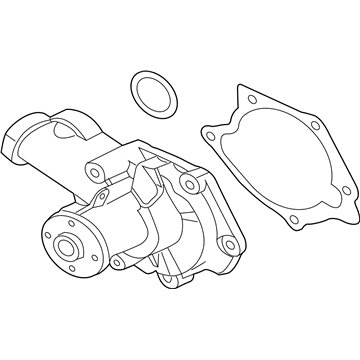
Mitsubishi Lancer Water Pump Assembly Part Number: 1300A065
$281.95 MSRP: $398.23You Save: $116.28 (30%)Ships in 1-2 Business DaysMitsubishi Lancer Water Pump Assembly Part Number: 1300A067
$323.27 MSRP: $456.60You Save: $133.33 (30%)Ships in 1-2 Business Days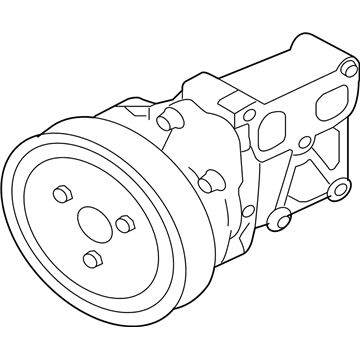
Mitsubishi Lancer Water Pump Assembly Part Number: 1300A083
$355.84 MSRP: $502.60You Save: $146.76 (30%)Ships in 1-2 Business Days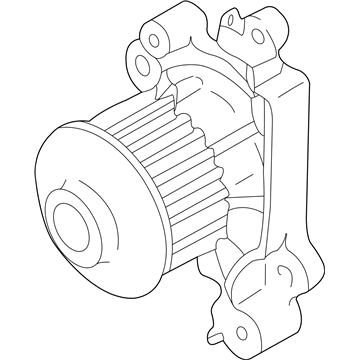
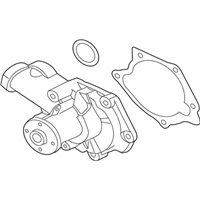
Mitsubishi Lancer Water Pump Part Number: MD309756
$195.48 MSRP: $264.88You Save: $69.40 (27%)Ships in 1-2 Business Days
Mitsubishi Lancer Water Pump
The Mitsubishi Lancer Water Pump is responsible for circulating coolant through the engine block, allowing heat to dissipate into the radiator and subsequently into the ambient air. The component is attached to the lower radiator hose and consists of a metal shaft that spins on bearings. A pulley on one end of the shaft is connected to the crankshaft via a belt. An impeller is located on the opposite end of the shaft. The impeller pushes fluid into the block and through the channels in the water jacket. The component connects the radiator, thermostat, and coolant passages into one big loop inside every Mitsubishi Lancer. The bearing seals in a seal encircling the shaft help to prevent coolant leakage. Modern units are made from durable and lightweight aluminum. This material is both strong and allows for efficient heat conduction. More importantly, the aluminum does not corrode easily and lasts for many years. As the engine operates, the Water Pump withdraws cooled liquid from the radiator, circulates it in the cylinder head and cylinder block, then returns hot coolant back towards the thermostat and radiator in a continuous cycle, thus controlling temperature. Some of the external coolant leaks, rumbling noise from worn bearings, and overheating after a broken impeller are signs of trouble. By keeping the Water Pump in good condition, the temperature of the Mitsubishi Lancer engine will not spike during regular driving. The Lancer cooling system relies on this belt driven design to sustain thermal balance and ensure combustion chambers are kept within an efficient operating range. As long as the Water Pump is fully operational, the system delivers consistent performance for the wider Mitsubishi family.
OEM Water Pump can boast superior quality and long-term durability. Each part meets strict factory specs and passes careful checks in production. So you'll get Water Pump with long-lasting strength and an exact fit. If you need OEM Mitsubishi Lancer Water Pump, the online store is the ideal place. The store carry a wide range of genuine Mitsubishi Lancer parts at the highly competitive prices. You'll enjoy a simple and no-hassle shopping experience. You'll get unbeatable prices and fast delivery service. You'll get the manufacturer's warranty and a straightforward return policy. Shop with confidence and keep your car in top condition.
Mitsubishi Lancer Water Pump Parts Questions & Experts Answers
- Q:How to remove and install a water pump on Mitsubishi Lancer?A:To remove and install, first disconnect the negative battery terminal. Drain the cooling system as previously described. For 1.5 litre models, remove the engine timing belt, then the retaining bolt to withdraw the timing belt tensioner. Next, remove the bolt retaining the alternator adjusting bracket to the water pump, loosen the adjuster lock bolt, and slide the bracket clear. Remove the water pump retaining bolts, noting the length of each, and use a twisting motion to free the pump from the transfer pipe, discarding the O ring. For 1.8 and 2.0 litre models, remove the timing belt, then the retaining bolts to withdraw the rear timing belt cover, and remove the water pump using a twisting motion while noting the installed position of the retaining bolts. For 2.4 litre models, remove the timing belt, then the tensioner assembly and the tensioner arm and pulley assembly. Remove the water pump retaining bolts, noting their positions, and tap the water pump from the engine with a rubber mallet, disconnecting it from the transfer pipe, while discarding the O ring and gasket. Use a sharp scraper to remove old sealant from the mating face of the cylinder block and the water pump if it is to be reused. Check the water pump drain holes for signs of coolant leakage, indicating a leaking seal or worn bearing, and rotate the water pump by hand to check for smooth rotation and wear. Installation is a reversal of the removal procedure with attention to installing a new O ring to the transfer pipe, lubricating it with water or coolant, applying a 2.4 - 3mm bead of Loctite Blue Maxx or equivalent sealant to the mating face of the water pump, and ensuring the retaining bolts are installed to their noted positions. Tighten the retaining bolts to the specified torque, ensure the timing belt is correctly installed and adjusted, install and adjust the drive belts, fill the cooling system, and finally road test the vehicle while checking for coolant leaks.
Related Mitsubishi Lancer Parts
 Mitsubishi Lancer Coolant Reservoir
 Mitsubishi Lancer Fan Motor
 Mitsubishi Lancer Radiator Hose
 Mitsubishi Lancer Coolant Pipe Seal
 Mitsubishi Lancer Cooling Fan Assembly
 Mitsubishi Lancer Cooling Fan Module
 Mitsubishi Lancer Cooling Hose
 Mitsubishi Lancer Engine Cooling Fan
 Mitsubishi Lancer Fan Blade
 Mitsubishi Lancer Fan Shroud
 Mitsubishi Lancer Radiator Support
 Mitsubishi Lancer Thermostat Housing