×
- Hello
- Login or Register
- Quick Links
- Live Chat
- Track Order
- Parts Availability
- RMA
- Help Center
- Contact Us
- Shop for
- Mitsubishi Parts

My Garage
My Account
Cart
Genuine Mitsubishi Diamante Speed Sensor
Speed Control Sensor- Select Vehicle by Model
- Select Vehicle by VIN
Select Vehicle by Model
orMake
Model
Year
Select Vehicle by VIN
For the most accurate results, select vehicle by your VIN (Vehicle Identification Number).
3 Speed Sensors found

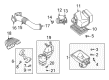
Mitsubishi Diamante Vehicle Speed Sensor Part Number: MR518300
$100.50 MSRP: $139.58You Save: $39.08 (28%)Ships in 1-2 Business DaysMitsubishi Diamante Vehicle Speed Sensor Part Number: MR534577
$111.85 MSRP: $155.35You Save: $43.50 (28%)Ships in 1-2 Business Days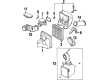
Mitsubishi Diamante Vehicle Speed Sensor Part Number: 8651A027
$98.16 MSRP: $136.32You Save: $38.16 (28%)Ships in 1-2 Business Days
Mitsubishi Diamante Speed Sensor
OEM Speed Sensor can boast superior quality and long-term durability. Each part meets strict factory specs and passes careful checks in production. So you'll get Speed Sensor with long-lasting strength and an exact fit. If you need OEM Mitsubishi Diamante Speed Sensor, the online store is the ideal place. The store carry a wide range of genuine Mitsubishi Diamante parts at the highly competitive prices. You'll enjoy a simple and no-hassle shopping experience. You'll get unbeatable prices and fast delivery service. You'll get the manufacturer's warranty and a straightforward return policy. Shop with confidence and keep your car in top condition.
Mitsubishi Diamante Speed Sensor Parts Questions & Experts Answers
- Q:How to remove and install the speed sensors on Mitsubishi Diamante?A:In Mirage speed sensor removal and installation, first, disconnect negative battery cable and wait at least 90 seconds before continuing. To begin with the front, lift the vehicle up, remove splash shield, disconnect speed sensor connector, remove clips that hold the harness of the sensor, and take speed sensor out of a bracket. To install, attach the speed sensor to the bracket with a mounting bolt and reinstall the clips. Connect the connector and reconnect the negative battery cable. To get to the rear, do the same steps as before. Unplug the speed sensor connector. Remove the clips and the mounting bolt from the speed sensor. To begin installation, the speed sensor should be loosely tightened. Reinstall the clips, adjust the sensor air gap to a specification of 0.012-0.035 inches, tighten the bracket followed by reconnecting the negative battery cable. When it comes to the Galant, the front process involves disconnecting the negative battery cable, lifting the vehicle, removing the tire and wheel assembly, fender splash shield, and ABS speed sensor connector, and then removing the sensor harness clamp bolts and the sensor. Ensure a clearance of 1.11 to 1.12 inch. Install the ABS speed sensor with its mounting bolt. Reinstall the harness, reconnect the connector. Reassemble the tire and wheel. The steps to disconnect and remove the sensor are the same as those of the front procedure. Subsequently, the two parts are reinstalled. Lastly, the battery cable is reconnected. For the Diamante, you first disconnect the negative terminal of the battery and wait for 90 seconds. Lift the vehicle and remove the splash shield. Detach the speed sensor connector. Then remove the clips and the sensor. Following a torque setting of 9 ft. lbs., rotate the speed sensor of the Torrid and reinstall the clips. Subsequently, connect the sensor and reconnect the battery cable. The rear module is similarly accomplished incorporating the unfastening of the cable band on AWD models, and installation with the exact torque specifications followed by re-connection of the harness and battery cable.
Related Mitsubishi Diamante Parts
 Mitsubishi Diamante A/C Hose
 Mitsubishi Diamante ABS Relay
 Mitsubishi Diamante Alternator Bearing
 Mitsubishi Diamante Fog Light Bulb
 Mitsubishi Diamante Ignition Coil
 Mitsubishi Diamante Instrument Panel Light Bulb
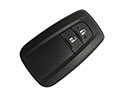 Mitsubishi Diamante Key Fob
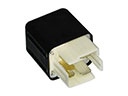 Mitsubishi Diamante Overload Relay
 Mitsubishi Diamante Relay
 Mitsubishi Diamante Starter Relay
 Mitsubishi Diamante Temperature Sender
 Mitsubishi Diamante Vehicle Speed Sensor