×
- Hello
- Login or Register
- Quick Links
- Live Chat
- Track Order
- Parts Availability
- RMA
- Help Center
- Contact Us
- Shop for
- Mitsubishi Parts

My Garage
My Account
Cart
Genuine Mitsubishi Diamante Ignition Coil
Ignition Coil Resistor- Select Vehicle by Model
- Select Vehicle by VIN
Select Vehicle by Model
orMake
Model
Year
Select Vehicle by VIN
For the most accurate results, select vehicle by your VIN (Vehicle Identification Number).
1 Ignition Coil found

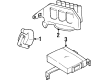
Mitsubishi Diamante Ignition Coil Part Number: MD152648
$186.19 MSRP: $252.29You Save: $66.10 (27%)Ships in 1-2 Business Days
Mitsubishi Diamante Ignition Coil
OEM Ignition Coil can boast superior quality and long-term durability. Each part meets strict factory specs and passes careful checks in production. So you'll get Ignition Coil with long-lasting strength and an exact fit. If you need OEM Mitsubishi Diamante Ignition Coil, the online store is the ideal place. The store carry a wide range of genuine Mitsubishi Diamante parts at the highly competitive prices. You'll enjoy a simple and no-hassle shopping experience. You'll get unbeatable prices and fast delivery service. You'll get the manufacturer's warranty and a straightforward return policy. Shop with confidence and keep your car in top condition.
Mitsubishi Diamante Ignition Coil Parts Questions & Experts Answers
- Q:How to test the ignition coil for 1.5L, 1.8L, 2.4L, and 3.5L engines in distributor ignition system on Mitsubishi Diamante?A:In order to check the ignition coil on 1.5L, 1.8L, 2.4L and 3.5L engines, first check the resistance of the primary ignition coil; with the electrical connector unplugged at the distributor, use an ohmmeter to check the resistance between the two terminals of the distributor, making sure not to include the wire harness; for the 3.5L engine check across terminals 1 and 2; the specifications are 0.9-1.2 ohms for the 1.5L, 1.8L and 2.4L engines and 0.5-0.7 ohms for the 3.5L engine. If the reading is outside these values the ignition coil is to be replaced whereas if it is in the range then there are no broken wires or shorts. Use your one test lead and insert it into the secondary ignition coil terminal on the top of the distributor cap. Now touch the second lead to terminal 1 or terminal 2 of the distributor connector. Here the specifications are at 20-29 kilo-ohms for the 1.5L, 1.8L and 2.4L engines and at 9-13 kilo-ohms for the 3.5L engine. If the readings do not match up to the requirements, repeat the process for the ignition coil. For the 2.0L SOHC engine (with the letter "B" at the end of the engine number), as well as the 3.0L SOHC engine, measure the primary ignition coil resistance by unplugging the electrical connector at the coil. Check the resistance between the two terminal. Specifications For The 2.0L SOHC Engine (0.9-1.2 ohms) For the 3.0L SOHC engine (0.72-0.88 ohms). To test the secondary ignition coil, insert one lead into the terminal on top of the cap on the distributor. Touch the second lead to either terminal 1 or 2 on the distributor connector. The specific at which you will get a reading is 20-29 kilo-ohms on the Nissan Maxima 2.0L SOHC. The specification on the 3.0L SOHC engine is 10.2-13.92 kilo-ohms. If the readings are within standard tolerance, and there are no broken wires or short circuits replace the ignition coil. To remove and install the ignition coil, disconnect the negative battery cable. Next, grip the boot and remove the coil wire. Then detach the electrical connectors, remove the retaining screws and the coil from the engine. Fitting is the reverse of removal.
Related Mitsubishi Diamante Parts
 Mitsubishi Diamante ABS Relay
 Mitsubishi Diamante Brake Light Switch
 Mitsubishi Diamante Clock Spring
 Mitsubishi Diamante Distributor Rotor
 Mitsubishi Diamante Instrument Panel Light Bulb
 Mitsubishi Diamante Neutral Safety Switch
 Mitsubishi Diamante Overload Relay
 Mitsubishi Diamante Relay
 Mitsubishi Diamante Relay Block
 Mitsubishi Diamante Spark Plug Wire
 Mitsubishi Diamante Starter Relay
 Mitsubishi Diamante Temperature Sender