×
- Hello
- Login or Register
- Quick Links
- Live Chat
- Track Order
- Parts Availability
- RMA
- Help Center
- Contact Us
- Shop for
- Mitsubishi Parts

My Garage
My Account
Cart
Genuine Mitsubishi Galant Axle Shaft
Car Axle Shaft- Select Vehicle by Model
- Select Vehicle by VIN
Select Vehicle by Model
orMake
Model
Year
Select Vehicle by VIN
For the most accurate results, select vehicle by your VIN (Vehicle Identification Number).
7 Axle Shafts found
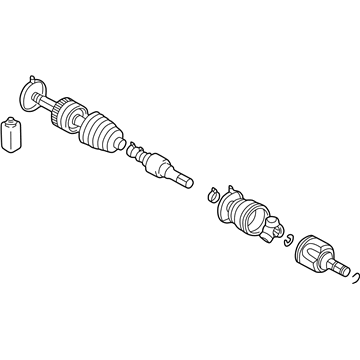
Mitsubishi Galant Axle Assembly, Passenger Side Part Number: 3815A358
$286.21 MSRP: $404.25You Save: $118.04 (30%)Ships in 1-2 Business Days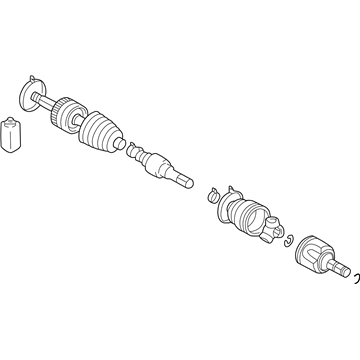
Mitsubishi Galant Axle Assembly, Driver Side Part Number: MN147043
$343.88 MSRP: $485.70You Save: $141.82 (30%)Ships in 1-2 Business DaysMitsubishi Galant Axle Assembly, Passenger Side Part Number: MR580732
$344.22 MSRP: $486.18You Save: $141.96 (30%)Ships in 1-2 Business Days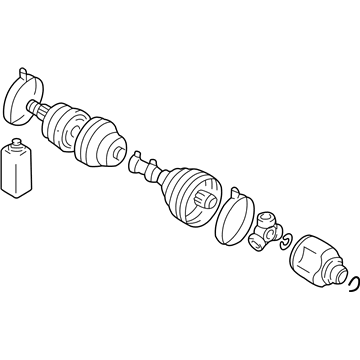
Mitsubishi Galant Axle Assembly, Passenger Side Part Number: MR980076
$344.34 MSRP: $486.35You Save: $142.01 (30%)Ships in 1-2 Business Days
Mitsubishi Galant Axle Assembly, Driver Side Part Number: 3815A043
$348.73 MSRP: $492.55You Save: $143.82 (30%)Ships in 1-2 Business DaysMitsubishi Galant Axle Assembly, Driver Side Part Number: MR580361
$361.07 MSRP: $509.98You Save: $148.91 (30%)Ships in 1-2 Business Days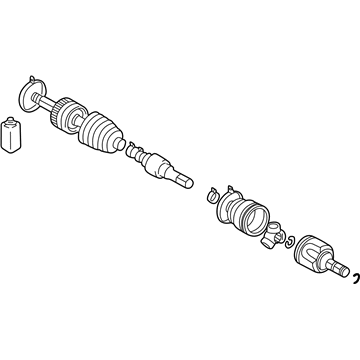
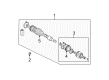
Mitsubishi Galant Axle Assembly, Passenger Side Part Number: MR196740
$200.18 MSRP: $271.25You Save: $71.07 (27%)Ships in 1-2 Business Days
Mitsubishi Galant Axle Shaft
OEM Axle Shaft can boast superior quality and long-term durability. Each part meets strict factory specs and passes careful checks in production. So you'll get Axle Shaft with long-lasting strength and an exact fit. If you need OEM Mitsubishi Galant Axle Shaft, the online store is the ideal place. The store carry a wide range of genuine Mitsubishi Galant parts at the highly competitive prices. You'll enjoy a simple and no-hassle shopping experience. You'll get unbeatable prices and fast delivery service. You'll get the manufacturer's warranty and a straightforward return policy. Shop with confidence and keep your car in top condition.
Mitsubishi Galant Axle Shaft Parts Questions & Experts Answers
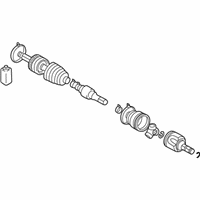
- Q:How is power transmitted from the transaxle to the wheels through an Axle Shaft, and what are the key components and maintenance considerations involved on Mitsubishi Galant?A:The transaxle supplies power to the wheels through a pair of Axle Shafts. Specifically, the inner end of each Axle Shaft is splined to the differential side gears and the outer ends, which are secured by a large nut, are splined to the front hubs. Each Axle Shaft assembly consists of a Axle Shaft connecting an inner constant velocity (CV) joint and an outer CV joint. The inner ends of the Axle Shaft assembly contain tripod joints that allow angular motion and axial motion. This enables the inner CV joints to slide in-and-out as the Axle Shaft moves in-synchronization with wheel motion. If a boot fails, these joints can be disassembled and cleaned. However, any damaged parts mean replacing the entire Axle Shaft assembly. The design of the outer CV joints uses a ball-and-cage design which allows angular movement only and not axial movement. If the outer boot becomes torn, the joint can be cleaned and repacked by a technician. The joint has the same replacement requirement as any other component of the CV joint system for components that are damaged or faulty. The boots must be regularly inspected for damage and leaking lubricant. If a CV joint boot is torn, it must be replaced immediately to prevent damage to the joint. Most boots are replaced with the Axle Shaft removed. Some auto parts stores carry a "split" type replacement boot that can be fitted without removal. Nevertheless, the Axle Shaft should be removed and the CV joint disassembled so that it can be more thoroughly cleaned to prevent wear. CV joints that are worn down or damaged may leak lubricant, make clicking noises when turning, clunk when you accelerate after coasting, and vibrate at highway speeds. Check for Wear. Grasp each axle separately and rotate it in both directions while holding the CV joint housings. Feel for play in the axles. If you feel some play, either the splines are worn or the CV joints are sloppy. Also check the axleshafts for cracks, dents, and distortion.
Related Mitsubishi Galant Parts
 Mitsubishi Galant Axle Shaft Seal
 Mitsubishi Galant CV Boot
 Mitsubishi Galant CV Joint
 Mitsubishi Galant Differential Bearing
 Mitsubishi Galant Differential Seal
 Mitsubishi Galant Driveshaft Center Support Bearing
 Mitsubishi Galant Driveshaft Yokes
 Mitsubishi Galant Pinion Bearing
 Mitsubishi Galant Slip Yoke
 Mitsubishi Galant Universal Joint
Browse by Year
2012 Axle Shaft 2011 Axle Shaft
2010 Axle Shaft
2009 Axle Shaft
2008 Axle Shaft
2007 Axle Shaft
2006 Axle Shaft
2005 Axle Shaft
2004 Axle Shaft
2003 Axle Shaft
2002 Axle Shaft
2001 Axle Shaft
2000 Axle Shaft
1999 Axle Shaft