×
- Hello
- Login or Register
- Quick Links
- Live Chat
- Track Order
- Parts Availability
- RMA
- Help Center
- Contact Us
- Shop for
- Mitsubishi Parts

My Garage
My Account
Cart
Genuine Mitsubishi Galant CV Boot
Axle Boot- Select Vehicle by Model
- Select Vehicle by VIN
Select Vehicle by Model
orMake
Model
Year
Select Vehicle by VIN
For the most accurate results, select vehicle by your VIN (Vehicle Identification Number).
5 CV Boots found
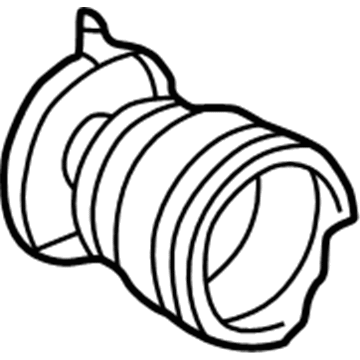
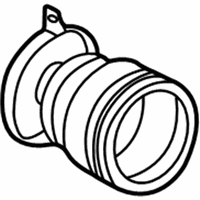
Mitsubishi Galant Inner Boot, Passenger Side Part Number: 3817A021
$65.51 MSRP: $90.98You Save: $25.47 (28%)Ships in 1-2 Business Days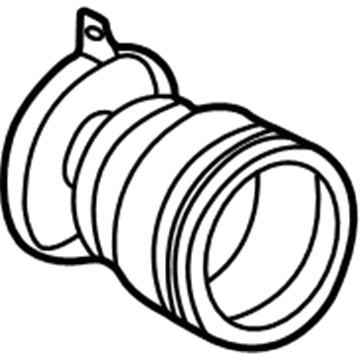
Mitsubishi Galant Inner Boot Part Number: MR446048
$79.33 MSRP: $110.18You Save: $30.85 (28%)Ships in 1-2 Business Days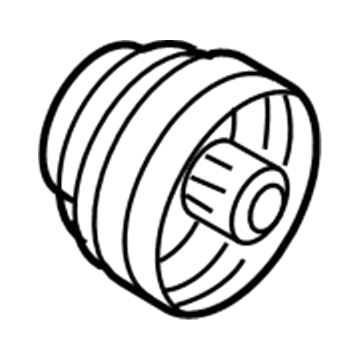
Mitsubishi Galant Inner Boot Part Number: 3817A107
$86.04 MSRP: $119.50You Save: $33.46 (28%)Ships in 1-2 Business Days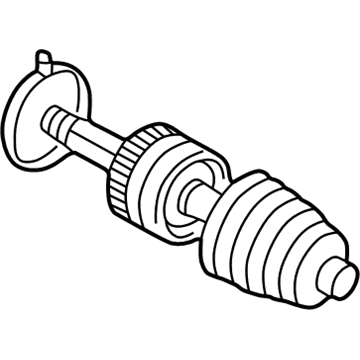
Mitsubishi Galant Outer Boot Part Number: 3817A017
$39.17 MSRP: $51.40You Save: $12.23 (24%)Ships in 1-2 Business Days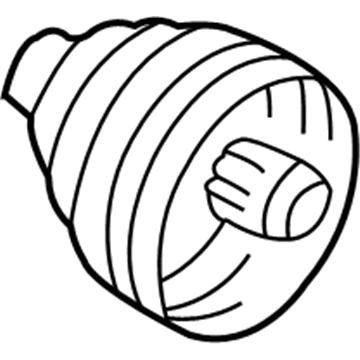
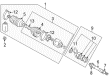
Mitsubishi Galant Inner Boot Part Number: MN156646
$40.25 MSRP: $52.82You Save: $12.57 (24%)Ships in 1-2 Business Days
Mitsubishi Galant CV Boot
OEM CV Boot can boast superior quality and long-term durability. Each part meets strict factory specs and passes careful checks in production. So you'll get CV Boot with long-lasting strength and an exact fit. If you need OEM Mitsubishi Galant CV Boot, the online store is the ideal place. The store carry a wide range of genuine Mitsubishi Galant parts at the highly competitive prices. You'll enjoy a simple and no-hassle shopping experience. You'll get unbeatable prices and fast delivery service. You'll get the manufacturer's warranty and a straightforward return policy. Shop with confidence and keep your car in top condition.
Mitsubishi Galant CV Boot Parts Questions & Experts Answers
- Q:Should CV Boot and Shock Absorber, and the steering linkage and other suspension components, be checked periodically on Mitsubishi Galant?A:The steering linkage and suspension parts are to be inspected regularly, with old or damaged components potentially causing undue tire wear, poor ride quality, and a decrease in fuel economy. Front suspension in the 1999 and subsequent models has a MacPherson strut design whereas other models have coil over shock absorber assemblies. In order to test the shock absorbers/struts, park the car on flat ground, switch off the engine, and use the parking brake. Check tire pressure, and press down on one end of the vehicle and release, observe the body movement, it is supposed to stop in one or two bounces. In case it keeps on moving or even it does not resume its starting position then it might be due to a damaged or a weak shock absorber or strut assembly. Check again at the other corners then lift the vehicle safely on jackstands. Check the shocks absorbers or struts to see whether there is fluid leakage and make sure that the fluid is of the shocks/struts. In case of leakage, change them as a set. Check for secure mounting and damage, particularly at the upper mounts, and replace as necessary. To check the suspension and steering, hoist the vehicle and visually check parts in terms of damage, seals, CV Boots, bushings and leakages. Clean the lower end of the steering knuckle and have an assistant move the wheel in-and-out to check for movement at the balljoint. In case of detection of any movement, the suspension balljoint(s) is to be replaced. Test steering system by pushing and pulling front tires; check steering gear boots, cracks and loose clamps; replace, when needed. CV Boots are supposed to be inspected to ensure no damage is done as damaged boots may cause expensive damage to the CV joints. Lift the front of the car, set the transaxle in Neutral, and examine the CV Boots, checking them by looking at them before cleaning them (should they be dirty). In case of any damage, change the boots and inspect the CV joints whether it is damaged or not, then lower the vehicle.
Related Mitsubishi Galant Parts
 Mitsubishi Galant Axle Shaft
 Mitsubishi Galant Axle Shaft Seal
 Mitsubishi Galant CV Joint
 Mitsubishi Galant Differential Bearing
 Mitsubishi Galant Differential Seal
 Mitsubishi Galant Driveshaft Center Support Bearing
 Mitsubishi Galant Driveshaft Yokes
 Mitsubishi Galant Pinion Bearing
 Mitsubishi Galant Slip Yoke
 Mitsubishi Galant Universal Joint
Browse by Year
2012 CV Boot
2011 CV Boot
2010 CV Boot
2009 CV Boot
2008 CV Boot
2007 CV Boot
2006 CV Boot
2005 CV Boot
2004 CV Boot
2003 CV Boot
2002 CV Boot
2001 CV Boot
2000 CV Boot
1999 CV Boot