×
- Hello
- Login or Register
- Quick Links
- Live Chat
- Track Order
- Parts Availability
- RMA
- Help Center
- Contact Us
- Shop for
- Mitsubishi Parts

My Garage
My Account
Cart
Genuine Mitsubishi Galant Fuel Pump
Gas Pump- Select Vehicle by Model
- Select Vehicle by VIN
Select Vehicle by Model
orMake
Model
Year
Select Vehicle by VIN
For the most accurate results, select vehicle by your VIN (Vehicle Identification Number).
3 Fuel Pumps found
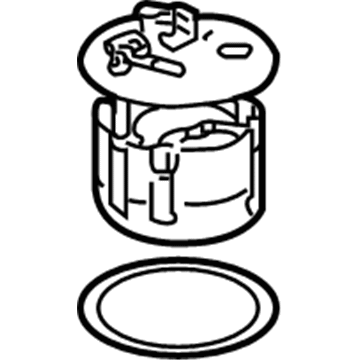
Mitsubishi Galant Fuel Pump Part Number: 1760A177
$243.02 MSRP: $343.25You Save: $100.23 (30%)Ships in 1-2 Business Days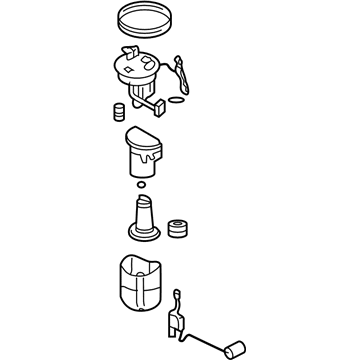
Mitsubishi Galant Fuel Pump Part Number: MR990817
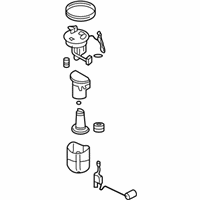
$291.51 MSRP: $411.73You Save: $120.22 (30%)Ships in 1-2 Business DaysMitsubishi Galant Fuel Pump Assembly Part Number: MR508283
$307.99 MSRP: $435.02You Save: $127.03 (30%)Ships in 1-2 Business Days
Mitsubishi Galant Fuel Pump
Gasoline is sent from the tank to the engine by the Mitsubishi Galant Fuel Pump for combustion. For Galant vehicles that utilize fuel injection, there is normally an electric pump located inside the tank, which is connected to the sending unit that relays level information to the dashboard's fuel gauge and uses an electric motor to push the pressurized fuel to the injection assembly. Mitsubishi Galant fuel injection variants are likely to be electric. Mechanical options are for carburetor versions only. Carbureted vehicles use a fixed mechanical pump attached to the engine. Its lever gets its motion from a camshaft eccentric. The diaphragm in the Fuel Pump housing is pulled by this motion, drawing fuel from the tank to the float bowl. Both variants have the same task of maintaining a constant flow of fuel. However, they differ in the location, drive method, and pressure they produce. The electric variant produces the higher pressure required by the injection components, while the mechanical variant produces the lower pressure suited to a carburetor. The Fuel Pump continuously provides fuel, and when defective can cause interruptions in the power supply. Gain insight on the operation of the Galant Fuel Pump to ensure that the Mitsubishi Galant starts and operates reliably, supporting the reliable daily transportation of the Mitsubishi nameplate.
OEM Fuel Pump can boast superior quality and long-term durability. Each part meets strict factory specs and passes careful checks in production. So you'll get Fuel Pump with long-lasting strength and an exact fit. If you need OEM Mitsubishi Galant Fuel Pump, the online store is the ideal place. The store carry a wide range of genuine Mitsubishi Galant parts at the highly competitive prices. You'll enjoy a simple and no-hassle shopping experience. You'll get unbeatable prices and fast delivery service. You'll get the manufacturer's warranty and a straightforward return policy. Shop with confidence and keep your car in top condition.
Mitsubishi Galant Fuel Pump Parts Questions & Experts Answers
- Q:How to remove and install the Fuel Level Sensor and Fuel Pump on Mitsubishi Galant?A:To remove the fuel pump, relieve the system fuel pressure and disconnect the cable from the negative battery terminal. Then take out both the rear seat cushion and the fuel pump service cover. For models from 1994 to 1998, except for California models, you should disconnect the fuel pump electrical connector. Then disconnect the fuel supply line and the fuel return hose. Take out the fuel pump retaining bolts and withdraw the fuel pump assembly from the fuel tank slowly and carefully, discarding the old gasket if replacing. For California models 1994-1998, the fuel pump and fuel level sending unit is an assembly. The procedure for removal or installation is the same as for non-California vehicles. For models commencing from 1999, proceed to remove the cover for the fuel pump service hole, then disconnect the wire harness. After which, proceed to disconnect the fuel supply line and the fuel return line. Take off the lock ring and gently pull the fuel pump/fuel level sending unit assembly out of the tank while checking the rubber seal for damage. For installation, clean the area surrounding the fuel tank opening and install a new gasket for 1994-98 model years. For models 1999 and later, the rubber seal should be installed into the opening of the fuel tank after being lubricated with a clean engine oil. The fuel pump/fuel level sending unit is inserted slowly into the tank. For 1994 through 1998 models, install the mounting bolts. For 1999 and later models, align the arrows on the fuel pump and the tank. Secure the ring nut but do not over-tighten. The remaining installation steps are the opposite of the removal step.
- Q:How to check Fuel Pump pressure and diagnose Fuel Pump delivery issues on Mitsubishi Galant?A:To measure the fuel pressure, a gauge that can measure up to around 70 psi is necessary. An adapter will be required to tee into the fuel supply line at the Fuel Rail because a Schrader valve type test port is not present in the fuel rail. You should check the battery, fuel pump fuse, fuel filter for restrictions, and all fuel lines for leaks if you suspect poor fuel delivery. Check the operation of the fuel pump Place the transaxle in Park (P) or Neutral (N) and apply the parking brake. Remove the fuel filler cap. Have someone turn the ignition key to the ON position and listen for a whirring noise. If the pump does not spin, check the fuel pump relay, which differs in location depending on model year. When the relay is good, but the pump doesn't run, check for voltage to the pump while cranking the engine. If your wiring and connectors are good, then the fuel pump is faulty. To find the fuel pressure, you need to relieve the pressure from the system then use a T-type adapter then attach the gauge at the fuel supply line at the firewall. With everything checked for leakage, turn ignition key to ON to pressurize the system. Now start the engine and note the gauge reading. In the event that the pressure is lower than specified, pinch off the fuel return line and again turn the key to ON, ensuring that no concentration in the specified pressure is maintained for so long. Should the pressure exceed the designated range, consider changing the Fuel Pressure Regulator. But if the pressure remains on the lower side, check for leaks in the Fuel Injectors, filter and lines. Also check the fuel pump inlet strainer and wiring. Check return line for restrictions. If pressure is higher than specified, replace the regulator. While the engine is idling, disconnect the vacuum hose from the fuel pressure regulator and check whether the pressure drops accordingly. If the pressure does not drop, verify that there is vacuum and replace the regulator if necessary. Ultimately, after taking the measurements, relieve the fuel pressure, remove the gauge, and reconnect the fittings.
Related Mitsubishi Galant Parts
 Mitsubishi Galant Fuel Filter
 Mitsubishi Galant Fuel Tank
 Mitsubishi Galant Throttle Position Sensor
 Mitsubishi Galant Fuel Filler Neck
 Mitsubishi Galant Fuel Hose
 Mitsubishi Galant Fuel Level Sensor
 Mitsubishi Galant Fuel Pressure Regulator
 Mitsubishi Galant Fuel Pump Gasket
 Mitsubishi Galant Fuel Sending Unit
 Mitsubishi Galant Fuel Tank Lock Ring
 Mitsubishi Galant Fuel Tank Vent Valve
 Mitsubishi Galant Gas Cap