×
- Hello
- Login or Register
- Quick Links
- Live Chat
- Track Order
- Parts Availability
- RMA
- Help Center
- Contact Us
- Shop for
- Mitsubishi Parts

My Garage
My Account
Cart
Genuine Mitsubishi Galant Oxygen Sensor
Oxygen O2 Sensor- Select Vehicle by Model
- Select Vehicle by VIN
Select Vehicle by Model
orMake
Model
Year
Select Vehicle by VIN
For the most accurate results, select vehicle by your VIN (Vehicle Identification Number).
2 Oxygen Sensors found
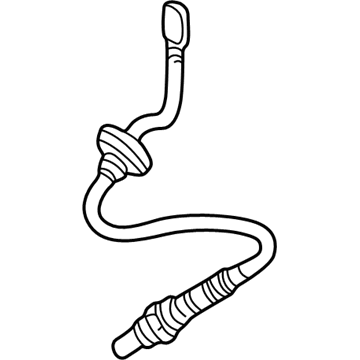
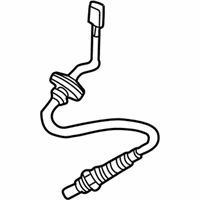
Mitsubishi Galant Oxygen Sensor Part Number: MR560364
$139.48 MSRP: $189.00You Save: $49.52 (27%)Ships in 1-2 Business Days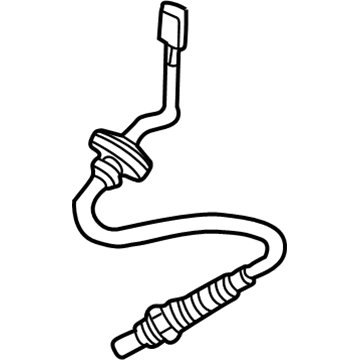
Mitsubishi Galant Oxygen Sensor, Passenger Side Part Number: MR507386
$141.72 MSRP: $192.03You Save: $50.31 (27%)Ships in 1-2 Business Days
Mitsubishi Galant Oxygen Sensor
OEM Oxygen Sensor can boast superior quality and long-term durability. Each part meets strict factory specs and passes careful checks in production. So you'll get Oxygen Sensor with long-lasting strength and an exact fit. If you need OEM Mitsubishi Galant Oxygen Sensor, the online store is the ideal place. The store carry a wide range of genuine Mitsubishi Galant parts at the highly competitive prices. You'll enjoy a simple and no-hassle shopping experience. You'll get unbeatable prices and fast delivery service. You'll get the manufacturer's warranty and a straightforward return policy. Shop with confidence and keep your car in top condition.
Mitsubishi Galant Oxygen Sensor Parts Questions & Experts Answers
- Q:How does an oxygen sensor function and what are the key considerations for its installation and maintenance on Mitsubishi Galant?A:The oxygen sensor is a galvanic battery that generates a small voltage depending on the oxygen content of the exhaust gas. This voltage input is included in the feedback loop with the PCM to maintain the ideal air/fuel ratio of 14.7:1 for ideal catalyst operation. OBD-II systems on vehicles built from 1996 onwards make use of two oxygen sensors (one before and one after the Catalytic Converter), use to monitor the efficiency of the converter and predict failures. There are usually two heated oxygen sensors in four cylinder models. The upstream or pre-catalytic converter sensor is located in the front exhaust pipe or exhaust manifold. Many V6 models have either two or four oxygen sensors depending on model year and configuration. The upstream sensor is typically in the exhaust manifold, while the downstream sensor is on the front exhaust pipe or between the catalytic converters. One oxygen sensor is usually positioned downstream of each catalytic converter. All oxygen sensors are heated to improve warm-up time, and care must be exercised during service so that either oxygen soldering beads or connectors will not be damaged. When changing a sensor, it is recommended to warm up the engine to facilitate removal, switch off the ignition, and raise the vehicle securely if required. The oxygen sensor must not be damaged by using a special oxygen sensor socket to unscrew the sensor. Also, the electrical connector must be disconnected. When reusing a sensor, it's best practice to apply anti-seize to the threads. Next, install the sensor and reconnect the electrical harness. Finally, take a test drive to check for trouble codes.
Related Mitsubishi Galant Parts
 Mitsubishi Galant Air Filter
 Mitsubishi Galant Intake Manifold
 Mitsubishi Galant Throttle Position Sensor
 Mitsubishi Galant Air Filter Box
 Mitsubishi Galant Fuel Filler Neck
 Mitsubishi Galant Fuel Pressure Regulator
 Mitsubishi Galant Fuel Rail
 Mitsubishi Galant Idle Control Valve
 Mitsubishi Galant Intake Manifold Gasket
 Mitsubishi Galant MAP Sensor
 Mitsubishi Galant Mass Air Flow Sensor
 Mitsubishi Galant Throttle Body Gasket
Browse by Year
2003 Oxygen Sensor
2002 Oxygen Sensor
2001 Oxygen Sensor