×
- Hello
- Login or Register
- Quick Links
- Live Chat
- Track Order
- Parts Availability
- RMA
- Help Center
- Contact Us
- Shop for
- Mitsubishi Parts

My Garage
My Account
Cart
Genuine Mitsubishi Lancer Brake Pads
Disc Brake Pad Set- Select Vehicle by Model
- Select Vehicle by VIN
Select Vehicle by Model
orMake
Model
Year
Select Vehicle by VIN
For the most accurate results, select vehicle by your VIN (Vehicle Identification Number).
14 Brake Pads found
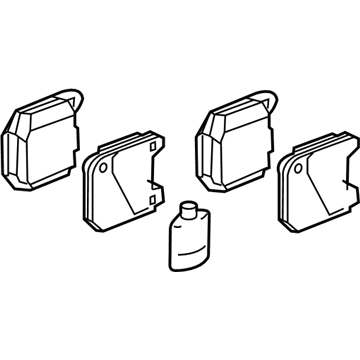
Mitsubishi Lancer Rear Pads Part Number: 4605B928
$308.66 MSRP: $435.97You Save: $127.31 (30%)Ships in 1-2 Business Days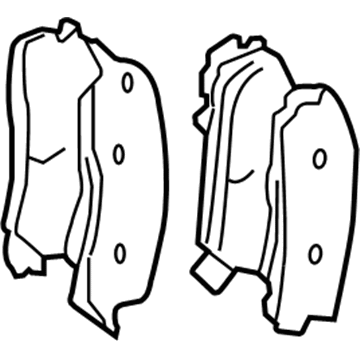
Mitsubishi Lancer Brake Pads Part Number: 4605B927
$331.47 MSRP: $468.18You Save: $136.71 (30%)Ships in 1-2 Business Days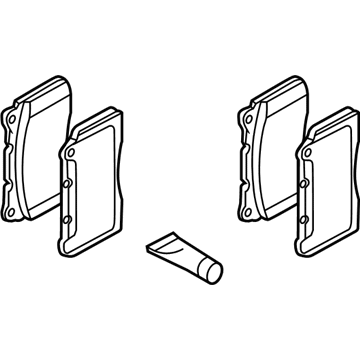
Mitsubishi Lancer Brake Pads Part Number: 4605B923
$351.53 MSRP: $496.51You Save: $144.98 (30%)Ships in 1-2 Business Days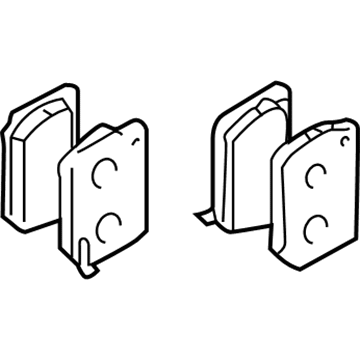
Mitsubishi Lancer Brake Pads Part Number: 4605B924
$356.17 MSRP: $503.08You Save: $146.91 (30%)Ships in 1-2 Business Days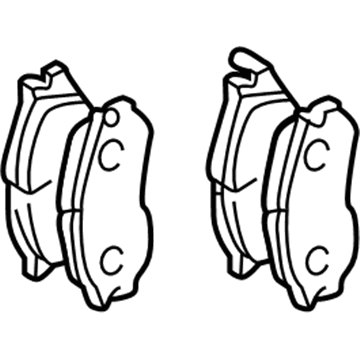
Mitsubishi Lancer Front Pads Part Number: MZ690563
$52.86 MSRP: $73.42You Save: $20.56 (28%)Ships in 1-2 Business Days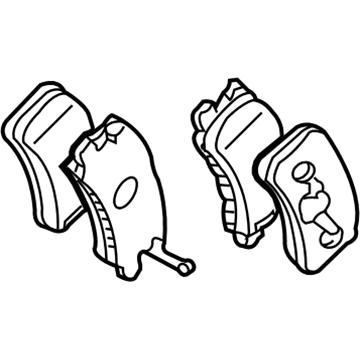
Mitsubishi Lancer Brake Pads Part Number: MZ690574
$54.12 MSRP: $75.17You Save: $21.05 (28%)Ships in 1-2 Business Days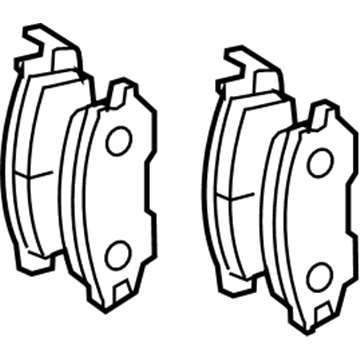
Mitsubishi Lancer Brake Pads Part Number: MZ690565
$54.12 MSRP: $75.17You Save: $21.05 (28%)Ships in 1-2 Business Days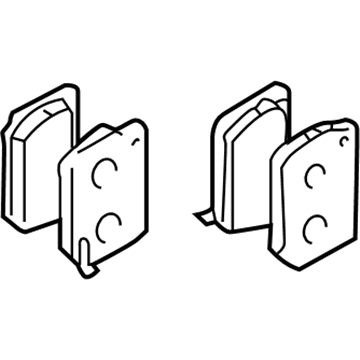
Mitsubishi Lancer Brake Pads Part Number: 4605A265
$72.49 MSRP: $100.68You Save: $28.19 (28%)Ships in 1-2 Business Days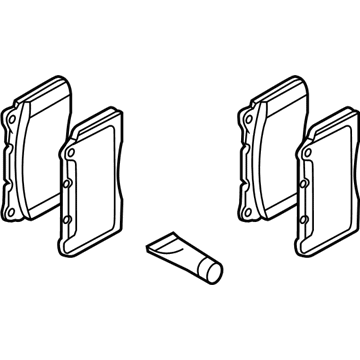
Mitsubishi Lancer Brake Pads Part Number: 4605A717
$87.67 MSRP: $121.77You Save: $34.10 (28%)Ships in 1-2 Business DaysMitsubishi Lancer Brake Pads Part Number: MZ690894
$42.00 MSRP: $57.99You Save: $15.99 (28%)Ships in 1-2 Business Days
Mitsubishi Lancer Brake Pads Part Number: 4605A487
$76.12 MSRP: $105.71You Save: $29.59 (28%)Ships in 1-2 Business DaysMitsubishi Lancer Rear Pads Part Number: 4605A479
$76.12 MSRP: $105.71You Save: $29.59 (28%)Ships in 1-2 Business Days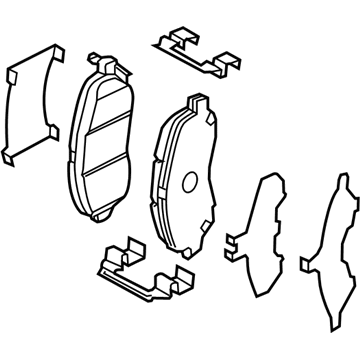
Mitsubishi Lancer Brake Pads Part Number: 4605A486
$90.10 MSRP: $125.13You Save: $35.03 (28%)Ships in 1-2 Business DaysMitsubishi Lancer Front Pads Part Number: 4605A261
$90.10 MSRP: $125.13You Save: $35.03 (28%)Ships in 1-2 Business Days
Mitsubishi Lancer Brake Pads
Mitsubishi Lancer Brake Pads provide a frictional force to slow and stop a vehicle when pressed against the brake discs. A friction compound that is affixed or occasionally riveted to a metal backing plate creates each pad, and typical use gradually wears this lining away. During the daily commute, the braking system of Mitsubishi Lancer uses these Brake Pads to generate heat by applying friction on the wheels and stopping the car gradually. The minimum allowable pad thickness is specified by the manufacturer of the vehicle. The Lancer is equipped with wear sensors that will alert the driver when the lining starts to approach its limit. Some pads feature built-in indicators to touch the rotor and emit noise to indicate this condition. When the Brake Pads have thin friction material, they should be replaced. Otherwise, it may lower the stopping ability and other brake components may get damaged. The original equipment Mitsubishi pads perform adequately for relaxed driving in the city, but when subjected to prolonged high-speed runs, heavy loads, or harder repeated stops, the heat build-up can lead to overheating and fade. This increases stopping distances. Choosing new Brake Pads for the Mitsubishi Lancer with the right thickness and material properties will restore the braking response and allow operation to remain safe for everyday use on the road.
OEM Brake Pads can boast superior quality and long-term durability. Each part meets strict factory specs and passes careful checks in production. So you'll get Brake Pads with long-lasting strength and an exact fit. If you need OEM Mitsubishi Lancer Brake Pads, the online store is the ideal place. The store carry a wide range of genuine Mitsubishi Lancer parts at the highly competitive prices. You'll enjoy a simple and no-hassle shopping experience. You'll get unbeatable prices and fast delivery service. You'll get the manufacturer's warranty and a straightforward return policy. Shop with confidence and keep your car in top condition.
Mitsubishi Lancer Brake Pads Parts Questions & Experts Answers
- Q:How to check and renew rear Brake Pads while inspecting the Brake Rotor on Mitsubishi Lancer?A:To examine and replace brake pads, raise the back end of the car and support it securely on jackstands before removing the rear wheels. Check the thickness of the brake pad lining through the inspection hole in the caliper body. If any pad is below minimum specification or is contaminated with grease or brake fluid, renew pads as a set and attendant cleaning beforehand. Withdraw two-thirds of the brake fluid from the master cylinder reservoir to help prevent overflow when pushing the caliper pistons back. Do not drain the reservoir completely. We do not want to bleed the hydraulic system. Only work on one caliper at a time. With the caliper unbolted, remove the lower caliper guide pin. Then, rotate the caliper upwards. This exposes the pads, shim and anti-rattle clip. Take out the disc pads and make a note of the direction of the wear indicators and anti-squeal shims. Also check the state of the anti-rattle clips. Make sure the guide pins move freely. If they are tight or the wear is uneven, clean them and lubricate them with rubber grease. Replace the upper guide pin bush if necessary. Using the handle of a hammer, press the piston into the caliper. If there are any leaks or damaged dust boots, overhaul the caliper. Make sure anti-squeal shims are clean and are fitted on the new disc pads. Also, ensure that anti rattle clips are seated properly. Place the pads on the anchor plate and lower the caliper ensuring that the shims do not foul, before fitting the lower guide pin and tightening to torque. Once the brake pads on both sides have been renewed, pump the brake pedal to place the brake pads against the Brake Rotor, topping up the master cylinder reservoir as necessary before putting on the rear wheels and lowering the vehicle. To ensure proper brake operation, a road test should be done, making moderate brake applications to avoid quick wearing out of the new pads. The same procedure is applicable to the caliper overhaul for the front calipers. To check the rear Brake Rotor, follow the procedure for the front, with specifications being the same as the front. In order to remove and install the rear Brake Rotor, raise the rear of the vehicle and support it securely on jackstands. Then remove the rear wheel. As you did before, rotate the caliper up and remove the brake pads. If you plan on reusing the disc, mark its position relative to the hub before withdrawing it, and avoid hammering against the disc face. If it is difficult to remove, use bolts in the threaded holes of the disc mounting flange. The installation is a reversal of the removal process and care should be taken to ensure clean mating faces. The marks made during removal should be aligned. If a new disc is to be installed, any protective coating should be removed. To complete the installation, the anchor plate must be installed, retaining bolts must be tightened to specification, and brake pads and caliper can be re-installed.
- Q:How to check and renew front brake pads (Brake Caliper, Brake Pads and Brake Rotor) on Mitsubishi Lancer?A:To check and renew brake pads, raise the front of the car and support it securely on jackstands. Remove the front wheels. Check the thickness of the brake pad lining using the inspection hole in the caliper body. If any pad is below specification minimum or contaminated, renew the pads in complete set and rectify contamination prior to installation. To prevent the master cylinder reservoir from overflowing when pushing back the caliper pistons, drain about two-thirds of the brake fluid. Carry out this job on one caliper at a time and renew the brake pads in sets of four. Take out the lower caliper guide pin and turn caliper upwards to expose the pads, shims and anti rattle clips. Remove disc pads noting the position of the wear indicators and anti squeal shims. If the guide pins feel tight or wear is uneven, clean and lubricate them for free movement. Insert hammer handle and push the piston back into the caliper. If there are leaks or any deterioration, consider having the caliper overhauled. Each inner pad must be fitted with a pad wear indicator, the anti-squeal shims cleaned and the anti-rattle clips properly seated before placing the pads on the anchor plate. Drop the caliper, put the lower guide pin in place and pump the brake pedal so that the pads fit alongside the Brake Rotor. If needed, top up with fluid, replace front wheels, lower vehicle, and road-test to check operation of brakes. To overhaul the caliper, lift the front of the vehicle, detach the banjo bolt and brake hose, and discard the washers. Take out the guide pins and remove the caliper. The dust boot can then be removed followed by forcing the piston from the caliper bore using compressed air or by pushing the brake pedal. Take off the piston seal. Clean all parts. Check for wear. Apply clean brake fluid to the piston and seal. Then fit the new seal and piston. Reattach the caliper, applying a correct torque on the guide pins and brake hose with sealing washers. You need Bleed the hydraulic system, install the wheel, lower the vehicle. To check the Brake Rotor, lift the front of the vehicle, then remove the wheel, and caliper with pads. The disc must be checked for scores, cracks, and wear. If scored, it must be machined. Examine the runout utilizing a dial gauge and, where required, modify the position of the disc or replace it. Take readings of the disc thickness at eight points, and renew if below specifications. Lift the vehicle and remove the wheel, caliper, and pads before removing and installing the anchor plate. Make a mark on the disc after removing it so you can put it back. Never use a hammer. During installation, be sure the mating faces are clean, torque the anchor plate bolts and refit the brake pads/caliper.
Related Mitsubishi Lancer Parts
 Mitsubishi Lancer ABS Control Module
 Mitsubishi Lancer ABS Pump And Motor Assembly
 Mitsubishi Lancer Brake Caliper
 Mitsubishi Lancer Brake Caliper Piston
 Mitsubishi Lancer Brake Drum
 Mitsubishi Lancer Brake Dust Shields
 Mitsubishi Lancer Brake Rotor
 Mitsubishi Lancer Parking Brake Cable
 Mitsubishi Lancer Wheel Bearing
 Mitsubishi Lancer Wheel Cylinder
 Mitsubishi Lancer Wheel Cylinder Repair Kit
 Mitsubishi Lancer Wheel Stud
Browse by Year
2017 Brake Pads
2016 Brake Pads
2015 Brake Pads
2014 Brake Pads
2013 Brake Pads
2012 Brake Pads
2011 Brake Pads
2010 Brake Pads
2009 Brake Pads
2008 Brake Pads
2007 Brake Pads
2006 Brake Pads
2005 Brake Pads
2004 Brake Pads
2003 Brake Pads
2002 Brake Pads