×
- Hello
- Login or Register
- Quick Links
- Live Chat
- Track Order
- Parts Availability
- RMA
- Help Center
- Contact Us
- Shop for
- Mitsubishi Parts

My Garage
My Account
Cart
Genuine Mitsubishi Lancer Wheel Cylinder
Brake Wheel Cylinder- Select Vehicle by Model
- Select Vehicle by VIN
Select Vehicle by Model
orMake
Model
Year
Select Vehicle by VIN
For the most accurate results, select vehicle by your VIN (Vehicle Identification Number).
1 Wheel Cylinder found
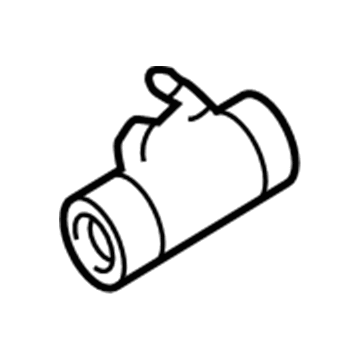
Mitsubishi Lancer Wheel Cylinder Part Number: MR129595
$87.13 MSRP: $121.01You Save: $33.88 (28%)Ships in 1-2 Business Days
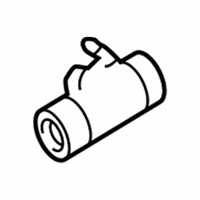
Mitsubishi Lancer Wheel Cylinder
OEM Wheel Cylinder can boast superior quality and long-term durability. Each part meets strict factory specs and passes careful checks in production. So you'll get Wheel Cylinder with long-lasting strength and an exact fit. If you need OEM Mitsubishi Lancer Wheel Cylinder, the online store is the ideal place. The store carry a wide range of genuine Mitsubishi Lancer parts at the highly competitive prices. You'll enjoy a simple and no-hassle shopping experience. You'll get unbeatable prices and fast delivery service. You'll get the manufacturer's warranty and a straightforward return policy. Shop with confidence and keep your car in top condition.
Mitsubishi Lancer Wheel Cylinder Parts Questions & Experts Answers
- Q:How to remove and install a wheel cylinder on Mitsubishi Lancer?A:To remove and install, first raise the rear of the vehicle and support it securely on jackstands, then remove the rear wheels and brake drums. If the brake shoes are still in place, operate the ratchet on the adjuster to move the brake shoes apart enough to allow the wheel cylinder to be removed. Disconnect the brake pipe from the wheel cylinder, sealing the end of the brake pipe to prevent dirt entry and loss of brake fluid. Remove the retaining bolts and manoeuvre the wheel cylinder from the vehicle. For installation, reverse the removal procedure while ensuring to tighten the brake pipe fitting and the wheel cylinder retaining bolts to the specified torque, install the brake drum, and adjust the brakes. Bleed the brakes using new brake fluid. For overhauling, if a wheel cylinder is worn or leaking, it may be more economical to install a new or exchange cylinder rather than overhauling the original assembly, so check the price difference before proceeding. Remove the boots, pistons, and spring from the wheel cylinder, then take off the cap and bleeder valve, checking that the valve and port are clear. Clean all parts with methylated spirits or clean brake fluid, and inspect the bore of the wheel cylinder for scoring or pitting; lightly hone cast iron cylinders, while aluminium cylinders that are scored or pitted should be renewed. Lubricate the new seals and pistons with clean brake fluid or a small amount of rubber grease, install the seals to the pistons ensuring the lip faces toward the centre of the wheel cylinder, then install the boots to the pistons, ensuring the end of the boot is correctly located in the groove in the piston. Finally, install the pistons and boots to the wheel cylinder, ensuring the end of the boot correctly locates in the wheel cylinder groove.
Related Mitsubishi Lancer Parts
 Mitsubishi Lancer Brake Pads
 Mitsubishi Lancer ABS Sensor
 Mitsubishi Lancer ABS Pump And Motor Assembly
 Mitsubishi Lancer Brake Caliper
 Mitsubishi Lancer Brake Caliper Bolt
 Mitsubishi Lancer Brake Caliper Bracket
 Mitsubishi Lancer Brake Caliper Piston
 Mitsubishi Lancer Brake Drum
 Mitsubishi Lancer Brake Rotor
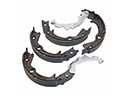 Mitsubishi Lancer Parking Brake Shoes
 Mitsubishi Lancer Wheel Bearing
 Mitsubishi Lancer Wheel Cylinder Repair Kit
Browse by Year
2017 Wheel Cylinder 2016 Wheel Cylinder 2015 Wheel Cylinder 2014 Wheel Cylinder 2013 Wheel Cylinder 2012 Wheel Cylinder 2011 Wheel Cylinder 2010 Wheel Cylinder 2009 Wheel Cylinder 2008 Wheel Cylinder 2007 Wheel Cylinder 2006 Wheel Cylinder 2005 Wheel Cylinder 2004 Wheel Cylinder 2003 Wheel Cylinder 2002 Wheel Cylinder