×
- Hello
- Login or Register
- Quick Links
- Live Chat
- Track Order
- Parts Availability
- RMA
- Help Center
- Contact Us
- Shop for
- Mitsubishi Parts

My Garage
My Account
Cart
Genuine Mitsubishi Diamante Brake Light Switch
Brake Lamp Switch- Select Vehicle by Model
- Select Vehicle by VIN
Select Vehicle by Model
orMake
Model
Year
Select Vehicle by VIN
For the most accurate results, select vehicle by your VIN (Vehicle Identification Number).
3 Brake Light Switches found

Mitsubishi Diamante Stoplamp Switch Part Number: MB596608
$62.18 MSRP: $86.37You Save: $24.19 (29%)Ships in 1-2 Business DaysMitsubishi Diamante Stoplamp Switch Part Number: MB435457
$19.47 MSRP: $25.36You Save: $5.89 (24%)Ships in 1-2 Business Days
Mitsubishi Diamante Stoplamp Switch Part Number: 8614A183
$29.79 MSRP: $38.78You Save: $8.99 (24%)Ships in 1-2 Business Days
Mitsubishi Diamante Brake Light Switch
OEM Brake Light Switch can boast superior quality and long-term durability. Each part meets strict factory specs and passes careful checks in production. So you'll get Brake Light Switch with long-lasting strength and an exact fit. If you need OEM Mitsubishi Diamante Brake Light Switch, the online store is the ideal place. The store carry a wide range of genuine Mitsubishi Diamante parts at the highly competitive prices. You'll enjoy a simple and no-hassle shopping experience. You'll get unbeatable prices and fast delivery service. You'll get the manufacturer's warranty and a straightforward return policy. Shop with confidence and keep your car in top condition.
Mitsubishi Diamante Brake Light Switch Parts Questions & Experts Answers
- Q:How to remove and install the brake light switch on Mitsubishi Diamante?A:The brake light switch can be removed by disconnecting the negative battery cable, and then the stop lamp switch electrical harness connector. Next, loosen the locknut securing the switch to the bracket, remove both the locknut and the switch. Installation requires putting the new switch in and screwing it with the locknut, but not too tight. Install the brake light switch so that a gap exists between the outer case of the switch and the pedal of 0.02-0.04 inches (0.5-1.0mm) so that when the pedal is released, the switch plunger will be extending in closing the switch, and the brake lights will light up. Position the switch appropriately and screw the locknut on, and then hook the wiring to the switch. To test its operation, you can turn the ignition key to the ON position but do not turn on the engine, have someone observe the brake lights as you press the brake pedal the lights should come on as the pedal passes the point of free play. Fine-tune the brake light switch until the slight freedom of movement in the pedal does not activate the brake lights since improper positions can cause the lights to turn off and on with the vibration of the pedal over road bumps.
Related Mitsubishi Diamante Parts
 Mitsubishi Diamante ABS Relay
 Mitsubishi Diamante Car Bulbs
 Mitsubishi Diamante Clock Spring
 Mitsubishi Diamante Cruise Control Switch
 Mitsubishi Diamante Fuse
 Mitsubishi Diamante Ignition Coil
 Mitsubishi Diamante Instrument Panel Light Bulb
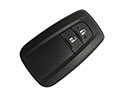 Mitsubishi Diamante Key Fob
 Mitsubishi Diamante Neutral Safety Switch
 Mitsubishi Diamante Oil Pressure Switch
 Mitsubishi Diamante Relay Block
 Mitsubishi Diamante Spark Plug Wire
Browse by Year
2004 Brake Light Switch 2003 Brake Light Switch 2002 Brake Light Switch 2001 Brake Light Switch 2000 Brake Light Switch 1999 Brake Light Switch 1998 Brake Light Switch 1997 Brake Light Switch 1996 Brake Light Switch 1995 Brake Light Switch 1994 Brake Light Switch 1993 Brake Light Switch 1992 Brake Light Switch